

Review · NEW DELHI
5 Days Delhi Agra Jaipur Golden Triangle Tour with Private car and Driver
The Taj Mahal is only one part of this five-day journey. You also get Delhi’s Mughal monuments, Agra’s grand fort, Fatehpur Sikri’s red sandstone courtyards, and Jaipur’s Rajput palaces, all linked by a private car and driver. The route gives you a fast but rewarding introduction to northern India.
I like the door-to-door transport, especially for a route where public connections can take time and patience. I also like the mix of grand sights and smaller stops, from Humayun’s Tomb to the Baby Taj. The main drawback is the pace: Delhi and Jaipur each deserve more time, and monument entrance fees are not included.
Key points to know before booking
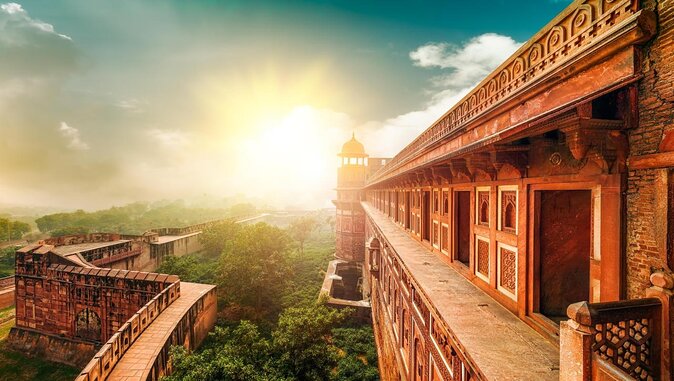
- Five days, three major cities: Delhi, Agra, and Jaipur make a classic first visit to northern India.
- Private vehicle and driver: You travel with your own group in an air-conditioned sedan, Innova, or larger van.
- The Taj Mahal is included in the route, not the price: Entrance tickets for monuments and museums cost extra.
- Hotel arrangements vary: Four nights and daily breakfast are included only if you choose the hotel option.
- A packed Jaipur day: Amber Fort, City Palace, Hawa Mahal, Jal Mahal, Jaigarh Fort, and Albert Hall Museum are all scheduled.
- Free cancellation up to 24 hours: Late cancellations are not refundable, and poor weather can lead to a changed date or full refund.
Why this Golden Triangle route works
Delhi, Agra, and Jaipur form India’s best-known northern circuit for good reason. Each city tells a different part of the story. Delhi brings together the Delhi Sultanate, Mughal rule, British-era memorials, and modern India. Agra is the Mughal heart of the journey, with the Taj Mahal and Agra Fort. Jaipur shifts the focus to Rajput power, palace life, military engineering, and pink sandstone architecture.
A private car makes the route easier to manage. You are not figuring out several train journeys, local transfers, or hotel pickups on your own. The vehicle includes air conditioning, Wi-Fi, bottled mineral water, seasonal fruit, and cookies during the drives. That sounds small, but snacks and water matter on long road days.
The group size also changes the feel of the trip. One or two people receive a four-seat sedan, three or four people travel in a six-seat Innova, and groups of five to ten use an 11-seat Tempo Traveller or van. You are not joining a large coach group, so the schedule belongs to your party.
At $539.95 per person, the value depends on what you select. The price includes the private car, driver, fuel-related driver allowance, hotel or airport transfers, GST, and professional office support. Four nights of accommodation and breakfast are included only with the hotel package. Monument and museum tickets, tips, and gratuities remain extra, so you should budget for those separately.
More Private Cars with a Driver in New Delhi:
- Taj Mahal and Agra Private Car Tour from Delhi with 5* Lunch
★ 5.0 · 1,633 reviews - Private Car and Drive for Golden Triangle (4N/5D)
★ 5.0 · 451 reviews - From Delhi: Jaipur Day Trip by Fast Train or Private Car
★ 4.8 · 332 reviews
Day 1: Delhi’s Mughal monuments and modern symbols
The first day covers a lot of ground. You begin at the Red Fort, the former residence of Mughal emperors. Shah Jahan commissioned it in 1638 when he moved the capital from Agra to Delhi. Its red sandstone walls are impressive, but the more interesting detail is the blend of Persian palace design and Indian building traditions.
Allow about two hours here. The fort is large enough to reward a steady visit, though you should not expect to see every corner at a leisurely pace. Entrance is not included, so confirm current ticket costs before setting out.
Next comes Qutub Minar, a 72.5-meter victory tower in the Qutub complex. Construction began in 1192 under Qutb Ud-Din-Aibak and continued under later rulers. The monument reflects the early Delhi Sultanate, giving you a sharp contrast with the later Mughal work at the Red Fort.
The planned visit is about one hour. This is a useful stop for understanding how Delhi’s ruling dynasties changed over time. Like the Red Fort, it requires a separate ticket.
India Gate is a shorter stop, with about 30 minutes for photographs and a look at the memorial. The sandstone arch honors troops of British India who died in wars between 1914 and 1919. There is no admission charge, making it an easy pause between paid sights.
Humayun’s Tomb is one of the day’s most important visits. Built in 1570, it was the first garden tomb on the Indian subcontinent and influenced later Mughal architecture, including the Taj Mahal. The formal garden setting and symmetrical design make it easier to appreciate the development of Mughal tomb architecture.
You have about an hour here. I would give this stop your full attention rather than treating it as a quick photo stop. It helps you see the Taj Mahal as part of a longer architectural tradition, not as an isolated wonder.
The final stop is Swaminarayan Akshardham, a Hindu temple and cultural complex near the Noida border. Its design presents traditional and modern Hindu culture through a large spiritual campus. The visit is scheduled for about an hour, and admission is extra.
This is an ambitious opening day. You see several major sites, but the schedule may feel full after the drive between them. If you like moving quickly and seeing a broad range of monuments, it works well. If you prefer long, quiet visits, you may find Delhi’s portion demanding.
Day 2: The Taj Mahal and Agra’s Mughal power
After breakfast, you leave Delhi for Agra, check into the hotel, and stop for lunch before sightseeing. The plan gives about four hours for the Delhi to Agra transfer and arrival routine. Your private driver is especially useful here because luggage, check-in, and local movement are handled as part of one continuous journey.
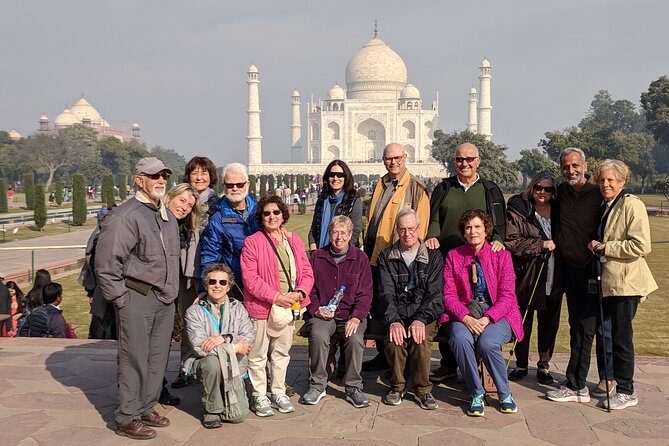
The Taj Mahal is the clear centerpiece. Shah Jahan commissioned the white marble mausoleum in 1632 for Mumtaz Mahal, and his own tomb was later placed beside hers. The building sits on the Yamuna River and is known for its balance, marble work, and carefully arranged gardens.
The suggested visit lasts two hours. Entrance is not included, so factor that into the cost. The Taj is also the place where timing matters most. The itinerary does not specify a sunrise visit, so you should ask the operator about the exact entry time if that matters to you.
Two hours is enough to see the main monument, grounds, and river-facing views without rushing badly. Still, the Taj Mahal can be emotionally and visually overwhelming, and you may wish the schedule allowed longer. Keep your camera ready, but give yourself time to look beyond the familiar front view.
Agra Fort follows, with about two hours planned. This was the main residence of Mughal emperors until the capital moved to Delhi in 1638. Its massive walls and palace areas show the political side of Mughal rule, while the Taj Mahal represents its ceremonial and personal side.
The fort is about 2.5 kilometers northwest of the Taj Mahal, so these two major sights fit naturally into one afternoon. I like this pairing because it gives the Taj context. You see where imperial decisions were made before seeing the monument associated with Shah Jahan’s family life.
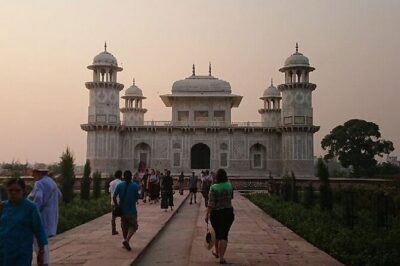
The final stop is the Tomb of Itimad-ud-Daulah, often called the Baby Taj. It is a smaller Mughal mausoleum and is frequently described as a draft or early model for the Taj Mahal. Its scale makes it a calmer counterpoint to Agra’s larger monuments.
You have one hour here, with admission extra. This stop is particularly worthwhile if you enjoy details, inlay work, and smaller buildings rather than only monumental scale. It also keeps the day from becoming a parade of enormous forts and domes.
Day 3: Fatehpur Sikri on the way to Jaipur
Day three begins with an early breakfast and checkout. You drive from Agra toward Jaipur, stopping at Fatehpur Sikri before reaching your hotel in Jaipur. The travel and transfer portion is scheduled for about four hours, followed by hotel check-in and rest.
Fatehpur Sikri was built by Mughal emperor Akbar in honor of the Sufi saint Sheikh Salim Chishti. The city is built mainly from red sandstone, and its architecture combines Islamic and Hindu elements. Akbar’s interest in religion, literature, architecture, and art shaped the city’s distinctive character.
The visit lasts about two hours. That gives you enough time to appreciate the courtyards, gates, and broad stone structures without trying to treat the abandoned city as a quick roadside stop. Admission is listed as free, though you should still follow the operator’s instructions about entry arrangements.
This is one of the most useful stops for understanding Akbar’s rule. The buildings show an emperor experimenting with design and expressing a broad interest in different cultural traditions. Compared with the Taj Mahal’s polished symmetry, Fatehpur Sikri feels more like a complete royal city.
The day is less crowded with scheduled sightseeing than the first two, but the road journey still takes energy. Use the evening in Jaipur to rest. The next day has six major stops, and it is the busiest sightseeing day of the tour.
More Five-Day Trips in New Delhi:
- 5 Days Tour in Sri Lanka (Hotels with Breakfast & Luxury Car)
★ 5.0 · 147 reviews - 5 Days Kerala Tour with Private Car Houseboat Munnar and Thekkady
★ 5.0 · 25 reviews - 5 Day Tuk Tuk Adventure in Chiang Mai – with driver
★ 5.0 · 21 reviews - 5 Days Private Vehicle with English Speaking Chauffeur
★ 5.0 · 9 reviews
Day 4: Jaipur’s forts, palace courtyards, and pink sandstone
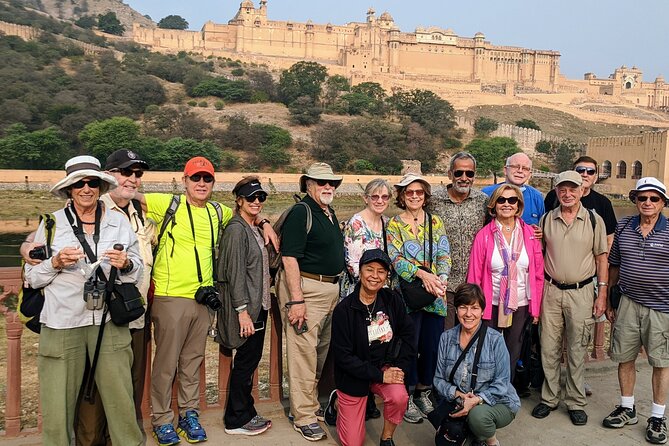
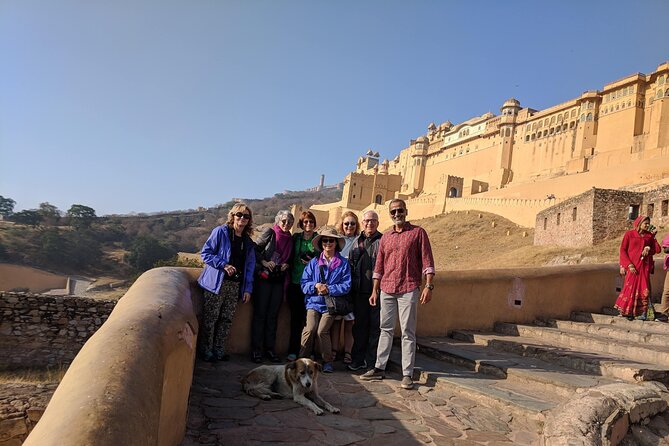
Jaipur’s sightseeing begins at Amber Fort, also known as Amer Fort. Built with strong Hindu design elements, the fort overlooks Maota Lake and includes large walls, gates, and sloping paths. Its setting helps you understand why this was both a royal residence and a defensive stronghold.
Two hours are planned here, and that is sensible. The fort is not a single room or viewpoint. It is a large complex, and the route through its courtyards and gates involves walking. Admission is extra.
City Palace comes next. The complex includes courtyards, buildings, pavilions, gardens, temples, and a museum. Chandra Mahal, Mubarak Mahal, and the Shri Govind Dev Temple are among its best-known parts.
The two-hour visit gives you time to see Jaipur’s royal side without reducing the palace to a quick photograph. If you enjoy decorative details and ceremonial spaces, this is likely one of Jaipur’s strongest stops. Museum admission is not included.
Hawa Mahal, the Palace of Winds, is scheduled for 30 minutes. Maharaja Sawai Pratap Singh built the five-story pink sandstone facade in 1799. Its small latticed windows, called jharokhas, combine Hindu and Islamic design features.
Thirty minutes is enough for the famous exterior and photographs, but not for a slow exploration. This is one of the itinerary’s shorter stops, so expect a focused visit rather than a full museum experience. Admission is free according to the tour details.
Jal Mahal offers another short pause. The five-story building sits in Man Sagar Lake, with four levels covered when the water is full. The surrounding Nahargarh Hills provide the setting, and the stop is primarily for views and photography.
The schedule allows 30 minutes and lists no admission fee. It is a welcome change after the fort and palace interiors. You can pause, take in the lake, and let the day breathe for a moment.
Jaigarh Fort brings you back to military history. The fort was a Rajput artillery center and is home to Jaivana, described as the world’s largest cannon on wheels at the time of its manufacture in 1720. The original foundry is also there.
The visit lasts one hour, with admission extra. Jaigarh adds substance to Jaipur’s royal story. You are not only seeing palaces and decorative facades, you are also seeing the machinery and defensive work that supported Rajput power.
The final stop is Albert Hall Museum, named for Prince Albert, the husband of Queen Victoria. It was built in the hope of attracting him during his 1876 visit to the Indian subcontinent. The museum offers a different note after a day of forts and palaces.
One hour is planned, and entrance is extra. With six stops in one day, you should expect an overview rather than a slow museum visit. The schedule is excellent for first-time visitors who want to identify the places worth revisiting, but it may feel crowded for anyone who prefers an unhurried pace.
Day 5: A simple transfer back to Delhi
After breakfast, you check out and travel by car to Delhi airport or a Delhi hotel. This final transfer is useful if you are flying home from Delhi or continuing your trip from the capital.
The schedule does not add sightseeing on this day. That is a benefit if you have an early flight or luggage to manage. It also means you should not treat the fifth day as another touring day when planning your departure.
What the private car adds
The private setup is the strongest practical feature. You can travel with only your own group, choose a sedan, Innova, or larger van based on party size, and keep your luggage with you between cities. An English-speaking professional driver handles the road connections and provides basic support.
The car is described as clean, sanitized, air-conditioned, and Wi-Fi enabled. Bottled water, seasonal fruit, and cookies are provided while you travel. Office support is also included, which gives you a contact beyond the driver if you need assistance during the route.
The driver is not automatically described as a sightseeing guide. That matters. The package lists an English-speaking driver and professional support, but it does not clearly say that a dedicated guide is included at every monument. Ask before booking if you want detailed guided tours inside the forts, tombs, and museums.
Who should book this five-day tour?
I would choose this tour if you want to see the Golden Triangle in a compact schedule without handling every transfer yourself. It suits first-time visitors, families, and small groups who value a private car and a fixed route.
It also works well if you want a broad introduction rather than a slow study of one city. You will see Mughal tombs, forts, mosques and palaces, Hindu temple architecture, Rajput military sites, British-era memorials, and modern Delhi culture in one trip.
I would hesitate if you dislike early starts, long road transfers, or full sightseeing days. Jaipur in particular is packed, and the tour does not leave much spare time for wandering markets or adding unlisted activities.
The hotel option deserves careful checking. Four nights and breakfast are included when you book the version with hotels, but not necessarily when you choose transport only. Entrance fees are always separate, and tips are not included.
Should you book it?
Book this tour if efficient transport, private service, and major sights matter more to you than a relaxed pace. The route gives you the Taj Mahal, Agra Fort, Fatehpur Sikri, Amber Fort, City Palace, and a strong selection of Delhi monuments in five days.
Choose another plan if you want deep time in each city or prefer to arrange your own hotels and tickets. Before paying, confirm the hotel category, the exact vehicle, monument entry costs, and whether local guides are included. If those details fit your needs, this is a practical way to see three of India’s most important historic cities without managing the road journey alone.
FAQ
How long is the Golden Triangle tour?
The tour lasts approximately five days and includes four nights of accommodation when you choose the hotel option.
Which cities does the tour visit?
The route covers New Delhi, Agra, and Jaipur, with a stop at Fatehpur Sikri between Agra and Jaipur.
Is the Taj Mahal included?
The Taj Mahal is included in the sightseeing route, but its entrance fee is not included in the tour price.
Is transportation private?
Yes. This is a private tour for your group, with an air-conditioned car or van and an English-speaking professional driver.
What vehicle is used for two people?
For one or two people, the tour provides a four-seat sedan.
What vehicle is used for larger groups?
Three to four people travel in a six-seat Innova. Groups of five to ten use an 11-seat Tempo Traveller or van.
Are hotels and breakfast included?
Four nights of accommodation and daily breakfast are included if you choose the option that includes hotels. They are not listed as included with every booking option.
Are monument and museum tickets included?
No. Entrance fees to monuments and museums are not included.
Can I cancel for a full refund?
You can receive a full refund if you cancel at least 24 hours before the experience begins. Cancellations or changes made within 24 hours are not refunded or accepted.
Just added around New Delhi
- Private Day Trip to Jaipur from Delhi via Expressway★ 4.5 · 17 reviews
- Taj Mahal Day Tour with Private Car and Driver from New Delhi★ 5.0 · 8 reviews
- Full-Day New and Old Delhi Private Car Tour with Pick Up★ 5.0 · 7 reviews
- Private 4 Days Golden Triangle Tour from New Delhi with Driver★ 5.0 · 4 reviews
- Agra Taj Mahal Sunrise Visit from Delhi by Private Car with Guide★ 4.5 · 3 reviews
- Full day city tour of Delhi with Guide and Private Car★ 5.0 · 16 reviews
- 2 Days Delhi Agra and Fatehpur Sikri Tour By Private Car★ 5.0 · 4 reviews
- 12 Hour Sunrise Taj Mahal Tour From Delhi By Private Car★ 5.0 · 18 reviews
New Delhi Limo Tours, compared.
Taj Mahal and Agra Private Car Tour from Delhi with 5* Lunch
Read our review →
Private Car and Drive for Golden Triangle (4N/5D)
Read our review →
Taj Mahal & Agra Private Day Tour from Delhi – All Inclusive
Read our review →
From Delhi: Jaipur Day Trip by Fast Train or Private Car
Read our review →
Golden Triangle Agra Jaipur with Namaste Private Driver India
Read our review →Skip the Line – Private Same Day Agra Tour by Luxury Car
Read our review →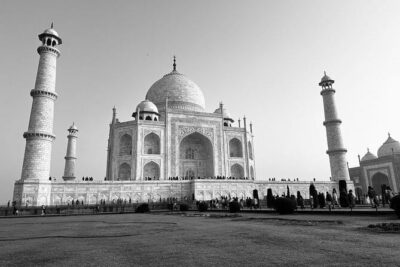
Private Sunrise Taj Mahal Tour – ” Round Trip from Delhi by Car “
Read our review →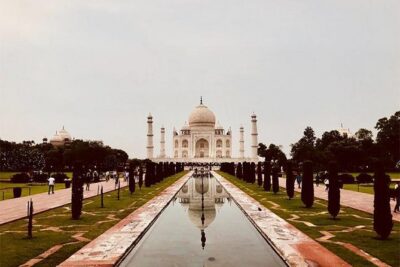
1 day Luxury Sunrise Taj Mahal Tour by Private Car
Read our review →Browse the lists this tour appears in