
Review · KATHMANDU
Kathmandu 2 days tour private car and guide, cover major highlights
Kathmandu’s biggest sights are packed into this two-day private tour: royal squares, hilltop prayer flags, sacred cremation ghats, and the great white dome of Boudhanath. You move by private car with a local guide, so you can set the pace instead of following a large group. Paras and Gyan are named guides associated with this experience, though your assigned guide may differ.
I like the flexible timing, since Kathmandu traffic and your own energy can shape the day. I also like the mix of places: Patan and Bhaktapur show fine Newar art, while Pashupatinath and Boudhanath let you see living religious traditions. The main consideration is pace. Seven major sites across two days can feel full, and entrance fees and meals are not included in the $95 price.
Key points to know before booking
- Four major sights on day one: Kathmandu Durbar Square, Swayambhunath, Pashupatinath, and Boudhanath.
- Patan and Bhaktapur fill day two: Expect roughly five to seven hours among palace courtyards, temples, and historic neighborhoods.
- Private transport keeps the plan flexible: Hotel pickup and drop-off are included, with timing arranged after confirmation.
- Guiding adds context: Guides such as Paras and Gyan explain local stories, religious customs, and details you might miss alone.
- The price covers the basics: Your private guide, car, van, or bus, and hotel transfers are included, but food, drinks, and monument fees are extra.
- The tour is for your group only: Children must be accompanied by an adult, and most people can take part.
Why this two-day plan works in Kathmandu
Kathmandu can feel confusing at first. Streets twist past shrines, motorcycles, courtyards, temples, shops, and traffic that seems to follow its own rules. This tour gives you a clear route through the city’s main cultural sites without asking you to arrange several separate taxis and guides.
The value is not just seeing more places. A local guide can explain why a statue matters, how a temple is used, and which parts of a palace square belong to different periods. Guides Paras and Gyan have received especially warm praise for making the sites easier to understand. Gyan, who has guided in Japanese, is also noted for sharing stories that are not usually found in a standard guidebook.
The private format matters here. You are not tied to a fixed walking group, and the schedule can be arranged by phone after booking. The listed start time is 9:45 am, but the description also allows a different time by arrangement. Confirm the exact pickup hour before the day begins.
At $95 per person, the tour is most attractive if two or more people share the private vehicle and guiding service. The exact value depends on your group size and the vehicle provided. You still pay separately for food, drinks, and monument admission, so budget for those extras.
More Private Cars with a Driver in Nepal:
- Airport Pickup By Private Car.
★ 4.5 · 25 reviews - Nagarkot Sunrise By Private Car
★ 5.0 · 21 reviews - 1 Night 2 Days Trishuli River Rafting Trip From Kathmandu With Private Car
★ 5.0 · 14 reviews
Kathmandu Durbar Square and the Kumari courtyard
Begin in Kathmandu’s old Durbar Square area, where royal courtyards and religious buildings sit close together. Allow about an hour for the main visit, though the full first day has a longer overall touring time because of the other sites and drives.
The square is best understood as a group of courtyards rather than one single monument. You may see carved windows, shrines, palace wings, ancient sculptures, and the former royal setting of the Shah rulers. The Newar craftsmanship is the main reason to take your time. Look closely at the woodwork and stone details instead of treating the square as a quick photo stop.
A special part of this visit is Kumari Baha, connected with the Kumari, Kathmandu’s living goddess. The site is a monastery courtyard, and the Kumari’s dwelling is one of the cultural highlights of the square. Your guide can explain the idea of the living goddess and the role she plays in local tradition.
The square also presents the effects of time and major earthquakes. The information supplied for the tour emphasizes monuments, palace sections, courtyards, and a gallery about the Shah rulers and Gurkhas. Ask your guide which buildings are open on the day you visit, since access can vary.
This first stop gives you an important frame for the rest of the tour. Kathmandu is not only a city of old temples. It is also a place where royal power, Buddhism, Hinduism, and daily life have shared the same courtyards for centuries.
Swayambhunath, the Monkey Temple on the hill
From the Durbar Square area, the drive to Swayambhunath takes about 30 minutes. The site is commonly called the Monkey Temple, and that nickname points to one of its most obvious features. The hilltop setting is also part of the appeal.
Swayambhunath gives you a different experience from the lowland palace squares. The visit combines religious monuments with a higher viewpoint over Kathmandu. Prayer flags, shrines, and the stupa create a strong visual change after the dense courtyards of Durbar Square.
You should expect some walking and steps at this stop. The supplied information does not specify an exact walking route or accessibility details, so ask the operator if you have mobility concerns. Most people can participate, but the tour is still a full sightseeing day with several sites.
This is a place where a guide is useful even if you can admire the stupa on your own. Religious symbols can look decorative when you do not know their meaning. A guide can help you read the site as an active place of worship rather than just another viewpoint.
Pashupatinath and the Bagmati River
The drive to Pashupatinath takes about 30 to 40 minutes from the previous area, followed by about an hour at the site. Pashupatinath is one of the most important Hindu temple complexes in the region, set along the sacred Bagmati River.
This is the most intense stop of the two days. The riverbank includes open public cremation areas, where funeral rites take place in view of the public. You may also see holy men with painted faces, dreadlocked hair, and ash on their bodies. This is not staged entertainment. It is a functioning religious site, and you should behave quietly and follow your guide’s instructions about where to stand and when photography is appropriate.
The main temple is a major Hindu shrine, and access rules may differ for people of different faiths. The tour description focuses on the wider complex and river area, so do not assume that you will enter every building. The value of the stop is the chance to understand Hindu ritual in a real setting, not simply to collect another monument.
I would place Pashupatinath earlier in your mental preparation than in your sightseeing checklist. If you are uncomfortable seeing cremation rites, tell your guide before arriving. You can still appreciate the architecture and river setting while choosing how closely to observe the ceremonies.
More Two-Day Trips in Nepal:
- 2-Day Sa Pa Ethnic Homestay Tour & Trek with Limousine Bus
★ 4.8 · 440 reviews - From Hanoi: 2-Day Sapa Limo Bus Tour & Fansipan Peak Visit
★ 4.6 · 277 reviews - From Hanoi: 2-Day Sapa Trek Tour – Luxury Limousine Transfer
★ 4.1 · 249 reviews - From Hanoi: 2-Day Overnight Sapa Tour by Luxury Van Limousine
★ 4.5 · 210 reviews
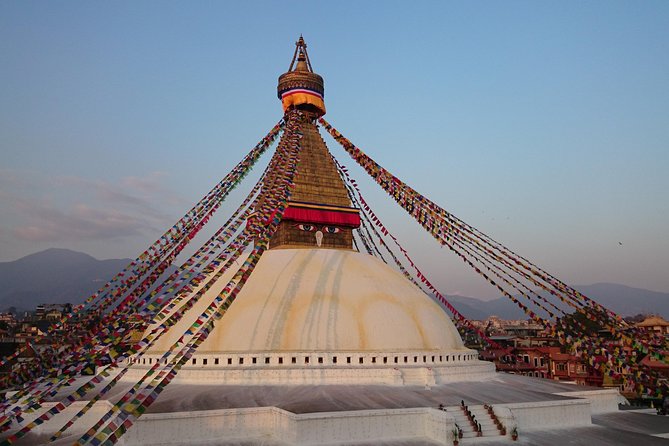
Boudhanath, Kathmandu’s Tibetan Buddhist center
After Pashupatinath, the route makes a short drive to Boudhanath Stupa, often called Little Tibet. The large white stupa is one of Kathmandu’s most recognizable sights, and the surrounding area has a strong Tibetan Buddhist character.
Boudhanath provides a calmer counterpoint to Pashupatinath. At the stupa, you can watch people move around the structure in a devotional circuit, while monasteries, shops, and cafes fill the surrounding streets. The tour information does not promise a monastery visit or a particular ritual, so treat those as possibilities rather than guaranteed parts of the schedule.
The guide can help you understand how to move respectfully around the stupa. Walk in the proper direction around the monument, avoid blocking worshippers, and ask before taking close-up photographs of people. Small habits like these make the visit more respectful and more rewarding.
By the end of day one, you have seen four very different sides of Kathmandu: the former royal center, a hilltop Buddhist shrine, a Hindu cremation site, and a major Tibetan Buddhist monument. That range is the strongest reason to choose this tour instead of spending two days only in palace squares.
Patan Durbar Square and Newar craftsmanship
Day two turns toward Patan and Bhaktapur, with a total touring time of about five to seven hours. The route is shorter than the first day in the sense that it covers two main historic squares, but both deserve careful attention.
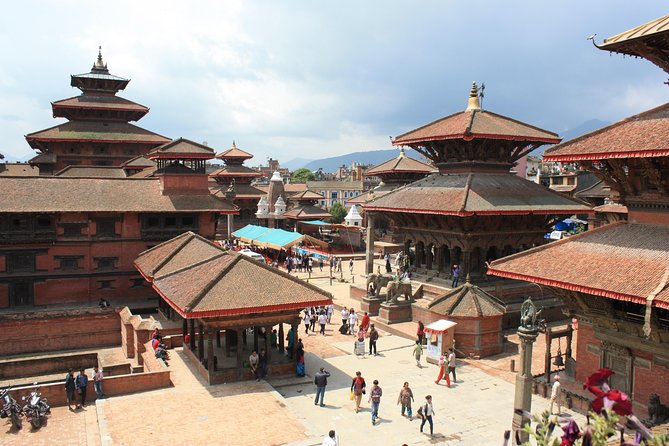
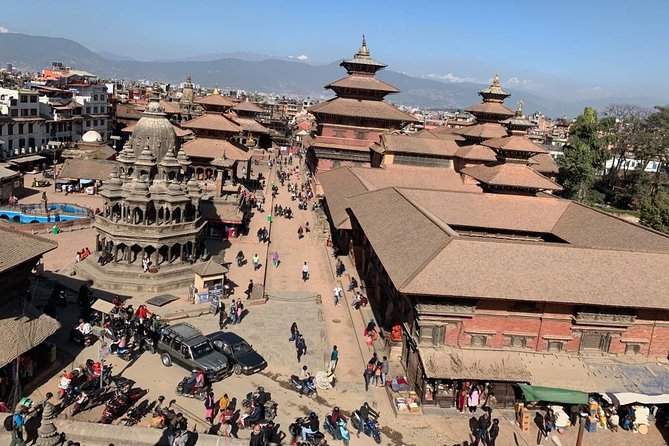
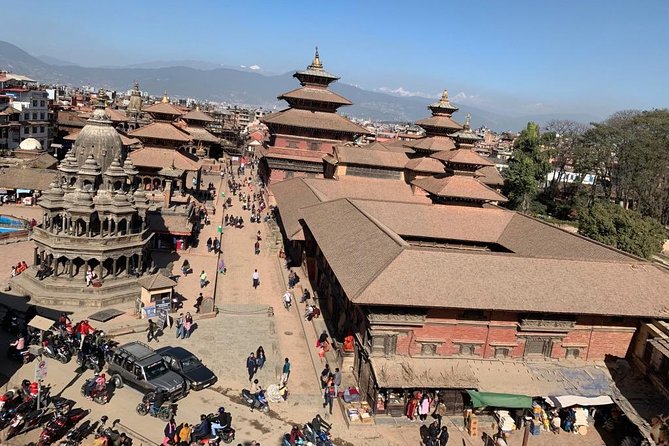
Patan Durbar Square is known for its medieval palace courtyards, temples, and detailed Newar architecture. The square works best as a slow walk. Rather than rushing from one famous building to the next, look at the metalwork, brick construction, carved doorways, and temple forms that repeat across the complex.
A private guide helps you sort out what you are seeing. Palace courtyards can appear similar when you first arrive, and a guide can point out which spaces served royal, religious, or civic purposes. The available description does not list a precise stop length at Patan, so use the flexible format to ask for enough time if architecture is your main interest.
Patan also gives you a chance to notice the connection between monumental buildings and ordinary neighborhoods. The tour describes villages as part of the second day, so you may see more than a polished central square. That contrast is valuable: historic Kathmandu is not locked inside museums. It remains part of daily life.
Bhaktapur’s medieval squares and village setting
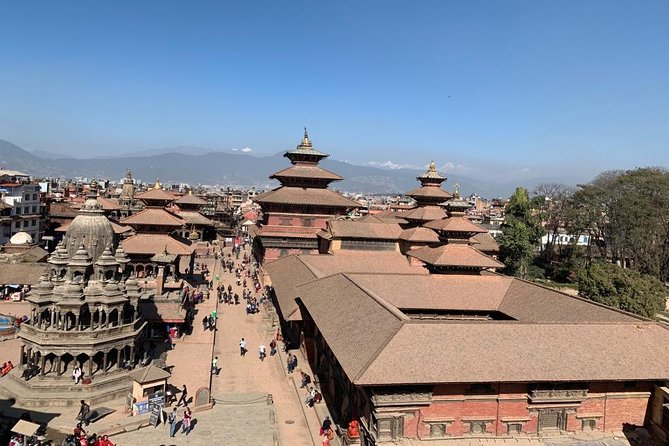
Bhaktapur adds another layer to the second day. Its appeal is the concentration of medieval palaces, temples, and public squares, along with the sense of a historic settlement rather than a single isolated monument.
You should expect another walking-based visit, with uneven surfaces possible around old courtyards and temples. The provided details do not promise a specific monument list inside Bhaktapur, so your guide will likely shape the route around the time available and current access.
The best way to approach Bhaktapur is to slow down. Notice how the buildings frame the squares, how shrines fit into everyday routes, and how village life continues around the old architecture. A guide can add stories and local details that are easy to miss if you only follow a printed map.
The drawback is that Patan and Bhaktapur in one half-day can feel compressed. If you care deeply about architecture or photography, ask in advance how much time will be spent at each square. If your goal is to see the major highlights efficiently, five to seven hours may be enough.
The private car, guide, and daily pace
Hotel pickup and drop-off are included, along with a private guide and private car, van, or bus. The exact vehicle depends on your group, and the experience is limited to your party rather than shared with strangers.
That arrangement is useful in Kathmandu, where drives between sites can take longer than the map suggests. The stated drives include about 30 minutes to Swayambhunath, 30 to 40 minutes to Pashupatinath, and a short transfer to Boudhanath. Traffic can affect the real timing, so keep your expectations loose.
You can arrange the departure time by phone after confirmation, although 9:45 am is the listed start time. This is a good feature if you are recovering from a flight, managing children, or planning another activity in the evening. The tour is not a good fit if you want long unscheduled breaks at every stop, since the route covers a great deal in two days.
The personal element depends heavily on your assigned guide. Paras is associated with clear explanations and an easygoing manner. Gyan is associated with local stories and Japanese-language guiding. Those names are useful when discussing your preferences with the operator, but they do not guarantee who will lead your tour.
What the $95 price really covers
The $95 per-person cost includes the private guide, private transport, and hotel pickup and return. For a small group, that can be a sensible way to cover six major cultural sites without arranging separate rides.
The price does not include food, drinks, or monument entrance fees. This is the main budget point to remember. The supplied information does not give the admission amounts, so you should ask the operator for current fees before departure and carry enough local currency if advised.
The price is strongest for people who value convenience and explanation. If you are comfortable arranging taxis, researching each site, and visiting without a guide, a self-directed plan may cost less. If you have only two days and want the main cultural sights organized around private transport, the package earns its keep more easily.
Who should book this tour
I would recommend it to a first-time visitor with only two full days in Kathmandu. It suits couples, families, and small groups who want their own vehicle and a guide who can adjust the pace.
It is also a good choice if you want both religious and architectural experiences. You see Hindu and Buddhist sites, royal squares, palace courtyards, cremation rites, and historic neighborhoods rather than repeating the same type of attraction.
I would be more cautious if you dislike full sightseeing days, find long drives tiring, or want to spend hours at one monument. The schedule is ambitious. Pashupatinath also requires emotional and cultural sensitivity, since cremation ceremonies are visible in the open.
Children are allowed but must be accompanied by an adult. Most people can participate, though you should discuss mobility needs with the operator because exact access details are not provided.
Should you book it?
Book this tour if you want Kathmandu’s main sights arranged efficiently, with private transport and a guide who can explain the meaning behind what you see. The mix of Kumari’s courtyard, Swayambhunath, Pashupatinath, Boudhanath, Patan, and Bhaktapur gives you a strong first look at the city in just two days.
Before paying, confirm the guide, vehicle, departure time, entrance fees, and how the second day will divide its time between Patan and Bhaktapur. If you do that and accept the full pace, $95 per person is a practical price for a focused private introduction to Kathmandu.
FAQ
How long is the Kathmandu tour?
The experience lasts two days. The first day covers the main Kathmandu sights, while the second day takes about five to seven hours for Patan and Bhaktapur.
What time does the tour start?
The listed start time is 9:45 am. The schedule can also be arranged by phone after booking confirmation, so confirm your preferred departure time with the provider.
Which places are visited on the first day?
The first day includes Kathmandu Durbar Square, Swayambhunath, Pashupatinath, and Boudhanath Stupa.
Which places are visited on the second day?
The second day includes Patan Durbar Square and Bhaktapur Square, with medieval palaces, temples, and village areas.
Is transportation included?
Yes. A private car, van, or bus is included, along with hotel pickup and drop-off.
Are meals and entrance fees included?
No. Food, drinks, and monument entrance fees are not included in the tour price.
Can I cancel for a full refund?
Yes. You can receive a full refund if you cancel at least 24 hours before the experience starts. Changes or cancellations made less than 24 hours before the start time are not accepted for a refund.
Just added around Nepal
- Luxurious Kathmandu to Pokhara Private Car Excursion★ 5.0 · 2 reviews
- Kathmandu Full Day Private Sightseeing by Private Car★ 5.0 · 2 reviews
- Private car transfer from Kathmandu Airport to hotels in Kathmandu★ 5.0 · 2 reviews
- Drive to Pokhara from Kathmandu or VV by Private Car★ 5.0 · 2 reviews
- Chandragiri Hills cable car day trip, private car with driver from Kathmandu★ 5.0 · 8 reviews
- Kathmandu: Private City Transfers Tours & Car Rental with options★ 5.0 · 2 reviews
- Trishuli River Rafting Day Trip From Kathmandu by Private Car★ 4.5 · 2 reviews
- Pokhara Day Tour (Private car)★ 5.0 · 4 reviews
Kathmandu Limo Tours, compared.
1 Night 2 Days Trishuli River Rafting Trip From Kathmandu With Private Car
Read our review →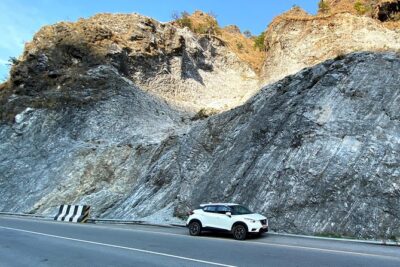
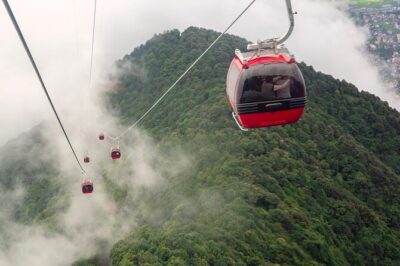
Chandragiri Hills cable car day trip, private car with driver from Kathmandu
Read our review →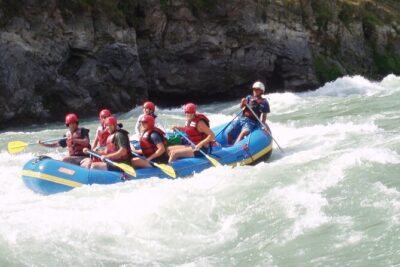
Trishuli River Rafting Day Trip From Kathmandu by Private Car
Read our review →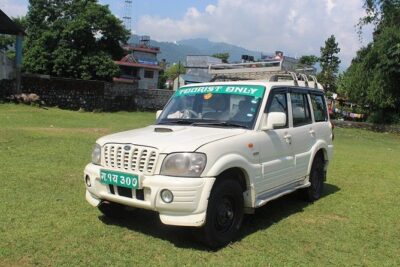
Drive to Pokhara from Kathmandu or VV by Private Car
Read our review →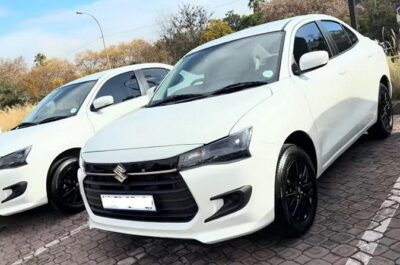
Kathmandu: Private City Transfers Tours & Car Rental with options
Read our review →Browse the lists this tour appears in