
Review · HISTORICAL TOURS
Tbilisi old town & soviet heritage – Private driver-guided Tour
Tbilisi’s character comes from sharp contrasts: ancient churches above the Mtkvari River, patterned wooden balconies in the old town, a futuristic glass bridge, Soviet-era urban traces, and market stalls crowded with old cameras and coins. This private tour links those pieces in one air-conditioned car, giving you a useful first look at a city that can feel confusing on foot.
I like the hotel pickup and the freedom to pause for photos or adjust the pace. I also like the mix of major sights and ordinary city life, especially Dry Bridge Market and the sulfur-bath district. The main consideration is the packed route: sixteen stops in five to six hours means some visits are brief, and the tour offers only limited time for the Soviet heritage promised in its title.
Key points to know before booking
- A private route with hotel pickup lets your group avoid public transport and adjust the pace.
- Narikala Fortress and the aerial tramway provide some of Tbilisi’s best city views in very little time.
- Dry Bridge Market adds a genuine local-shopping stop, with antiques, old books, postcards, cameras, and household goods.
- The route covers both old and modern Tbilisi, from Metekhi Church and Abanotubani to the Bridge of Peace and Bazari Orbeliani.
- Guides named Giga, Timo, Makho, and Goga have been praised for personal attention, local food advice, and flexible pacing, though your assigned guide may differ.
- The price is $77.93 per person, with the best value coming when several people share the private vehicle.
Tbilisi in one well-packed half-day
This is a sightseeing sampler rather than a slow walking tour. You begin around 9:30 a.m. with pickup from your Tbilisi hotel or apartment, then move between hilltop viewpoints, churches, central avenues, markets, and the old town.
The air-conditioned car matters here. Tbilisi spreads across steep hills and both banks of the Mtkvari River, so using a car saves energy and lets you reach the Chronicles of Georgia, Holy Trinity Cathedral, Narikala, and Rustaveli Avenue in one outing. WiFi on board and bottled water are included.
The route is private, so only your group takes part. That makes a real difference for families, couples, and small groups with different walking speeds. One guide, Makho, was specifically praised for adapting the day to a family with two young children and an older person. You can ask for extra photo stops or spend less time at places that do not hold your interest.
The tradeoff is pace. The listed stops add up to more than four and a half hours before driving time, and several visits last only 10 to 20 minutes. You will see a lot, but you will not study every church, market stall, or museum-like display at length.
More Private Cars with a Driver in the world:
- Nusa Penida: Private Car Hire with Driver
★ 4.7 · 2,273 reviews - Bali Private Car Hire with Driver
★ 5.0 · 2,061 reviews - Bali: Customized Private Car Charter with Optional Guide
★ 4.8 · 1,999 reviews
Metekhi Church and the first look at old Tbilisi
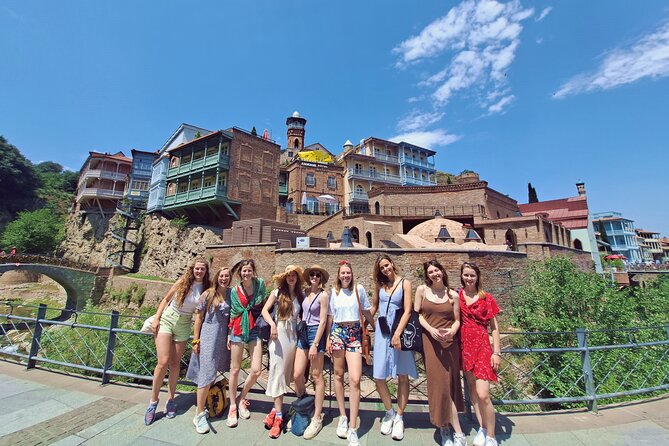
The tour begins at Metekhi Cathedral, a 13th-century church set above the river. Allow about 20 minutes here. It is a quick introduction to Tbilisi’s older quarters, with narrow streets, colorful façades, and the city’s famous patterned balconies nearby.
This is a good place to get your bearings. The setting helps explain why Tbilisi feels layered: religious buildings, homes, roads, and the river all press close together. The visit is free, but the short stop means you should focus on the view, exterior details, and your guide’s explanation rather than expect a long church visit.
Holy Trinity Cathedral and Georgia’s Orthodox tradition
Holy Trinity Cathedral, also called Sameba, receives about 30 minutes. At 101 meters, it is the tallest church in Georgia and one of the easiest buildings to spot from across Tbilisi.
The scale is the main point. After the tighter streets around Metekhi, the cathedral grounds feel open and spacious. You have time to look at the building, take photographs, and hear about its place in modern Georgian religious life.
The cathedral is free to enter, according to the tour details. Dress and behave respectfully at this active place of worship. The schedule does not promise time for a full service or extended interior visit, so think of this as a focused stop rather than a church study.
Chronicles of Georgia, Tbilisi’s dramatic hilltop monument
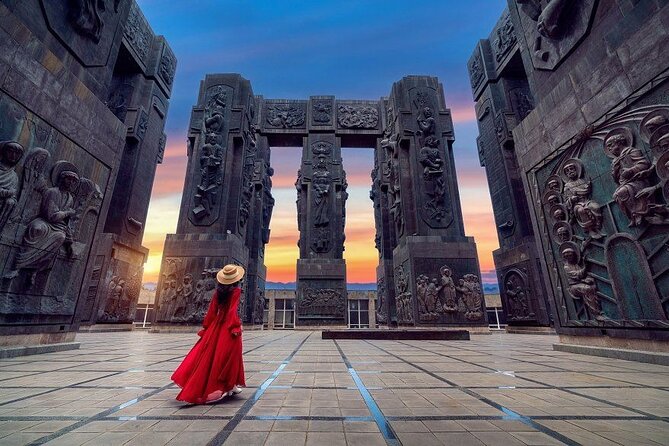
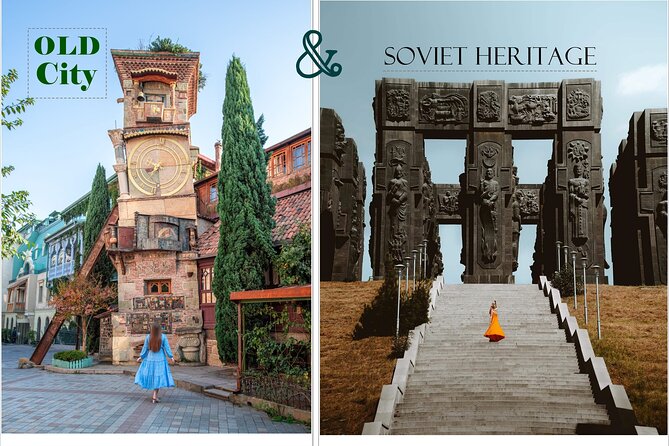
The Chronicles of Georgia takes about 30 minutes and is one of the more unusual stops. Sixteen huge pillars show Georgian rulers and national events on one side, with scenes from the life of Jesus on the other. Because of its size and hilltop setting, it is often compared to Stonehenge.
This stop gives the tour a different feel from the old town. You are not simply looking at a medieval church or a restored street. You are seeing a monumental statement about Georgia, with broad views and towering carved panels.
The tour title includes Soviet heritage, and this is the place where that theme is most likely to come through in the route’s monumental style and modern-era setting. Still, the supplied schedule does not identify a dedicated Soviet museum, housing district, or detailed Soviet-history stop. If that subject is central to your plans, ask the guide before departure how much time can be given to it.
More History Trips in the world:
- Malacca Historical Private Tour With Personal Chauffeur
★ 4.5 · 151 reviews - Private car tour Let’s uncover secrets of majestic Kyoto history
★ 5.0 · 45 reviews - World heritage Ahmedabad city tour in private car with guide and lunch
★ 5.0 · 44 reviews - Bucharest Jewish Heritage | Holocaust Memorial | Private Car Tour
★ 5.0 · 38 reviews
Rike Park, the cable car, and Narikala Fortress
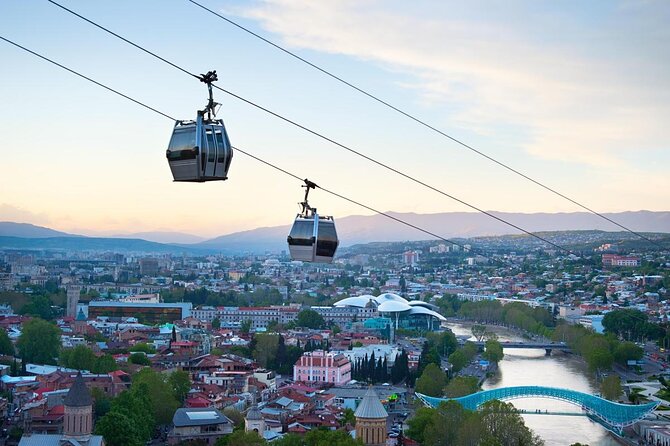
The aerial tramway takes only about two minutes, but it is one of the most efficient parts of the day. It connects Rike Park on the left bank of the Mtkvari with the Narikala Fortress hill. Large windows give you a quick 360-degree view as the car rises above the city.
The ride is included, unlike the sulfur baths later in the day. You should expect the car ride itself to be brief, with the real reward coming from the views at either end.
Narikala Fortress receives about 15 minutes. Tbilisi’s ancient stronghold is known locally as the heart and soul of the city, and the position above the old town explains why. From here, you can look over the river, tiled roofs, churches, modern buildings, and the hills around the city.
Fifteen minutes is enough for photographs and a short explanation, but not for a long walk around the fortress. Wear comfortable shoes and expect some uneven ground. The tour requires a moderate level of physical fitness, and the combination of hills, steps, and short walks should be taken seriously.
After Narikala, you spend about 10 minutes at Rike Park, also referred to as Europe Square in the supplied route. It is a modern meeting place beside the river and a useful contrast to the old fortress above it.
Shardeni Street, the Jumah Mosque, and the old town’s mix
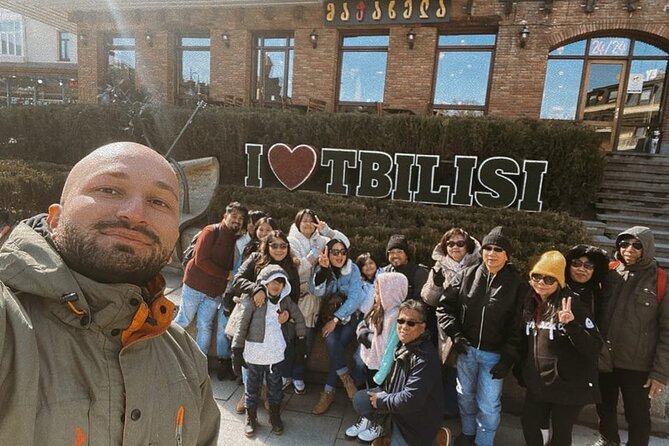
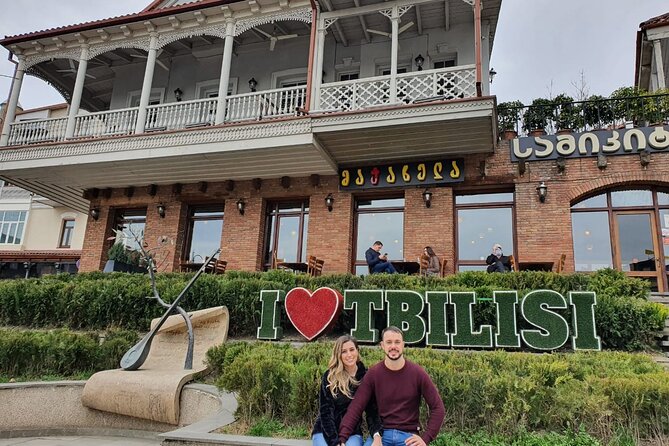
Jan Shardeni Street is a pedestrian lane with restaurants, cafés, and restored façades. The 15-minute stop is short, but it places you in one of the most recognizable parts of old Tbilisi.
The route then gives five minutes to the Jumah Mosque. It is described as the city’s only Muslim shrine and is known as a place of worship for both Sunni and Shia Muslims. The simple red-brick building adds an important religious and cultural layer to the old town.
Do not expect a long mosque visit at this pace. The value comes from seeing how Orthodox Christian, Muslim, and other traditions sit close together in Tbilisi’s compact center. Your guide can help explain the setting, but the exact amount of interior access is not specified.
Dry Bridge Market and the pleasure of old things
Dry Bridge Market is one of the strongest stops for an authentic feel. You get about 30 minutes on the first visit and another 15 minutes later in the route. The duplication may reflect two different portions of the market, but it is worth confirming with your guide so you do not feel you are repeating the same stop.
The market is known for old coins, postcards, dishes, paintings, books, accessories, vintage phones, and cameras. Local residents bring out objects from their homes, so the stalls can feel more personal than a standard souvenir shop.
This is a good place to browse without a fixed shopping list. You might find a small Georgian keepsake, but the real pleasure is in seeing what people have saved and decided to sell. Thirty minutes allows a quick look and perhaps a purchase. It is not long enough for careful comparison across every stall.
Use ordinary market sense: check prices, inspect condition, and do not assume an old-looking object is genuinely antique. The tour provides transport and guidance, but purchases are not included.
Rustaveli Avenue and the modern city
The Shota Rustaveli Statue stop lasts about 20 minutes and introduces Rustaveli Avenue, the central boulevard running roughly 1,500 meters through Tbilisi. Government, public, cultural, and business buildings line the avenue.
This section helps balance the old-town focus. You see the city as a working capital rather than only as a medieval quarter. It is also the clearest route segment for understanding Tbilisi’s later urban development, though the schedule does not promise a detailed Soviet-era walking tour.
If you want stronger Soviet context, this is a sensible moment to ask questions. The title suggests that the tour includes that theme, but most listed stops focus on religious landmarks, old-town streets, markets, and newer public architecture.
The Bridge of Peace and the Mtkvari River
The Bridge of Peace takes about 10 minutes. Opened to the public in 2010, this pedestrian bridge links the old town with Rike Park. Its glass and steel design looks very different from the surrounding historic streets.
The short visit works well because the bridge is easy to cross and photograph. You get a clear view of the river and a direct lesson in how Tbilisi has added bold modern buildings beside its older quarters.
This is a photo stop, not an architecture seminar. The guide can place it in the city’s recent development, while you decide how much time to spend looking at the structure itself.
Abanotubani, Tbilisi’s sulfur-bath district
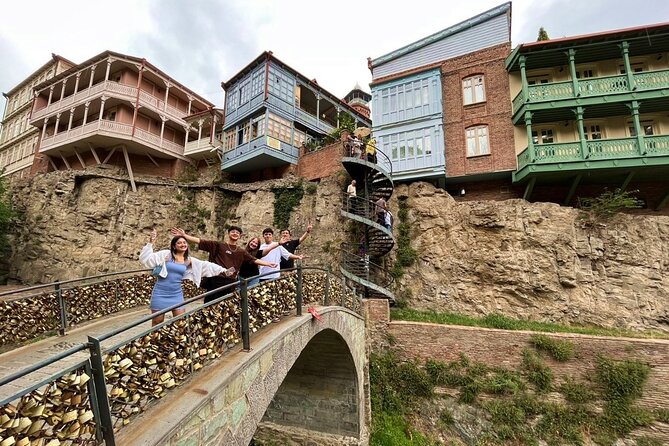
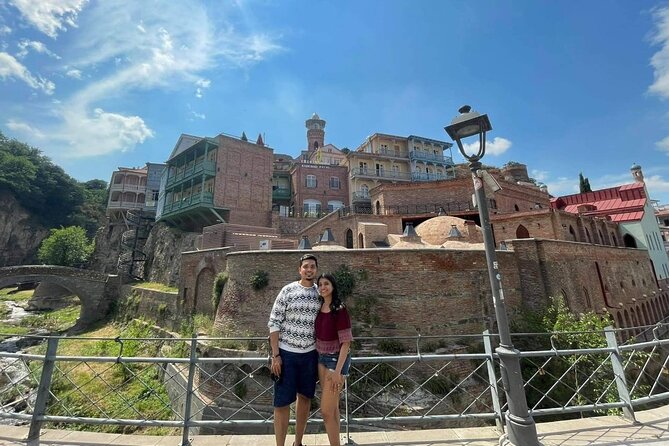
Abanotubani receives about 20 minutes. Its domed sulfur bathhouses are among Tbilisi’s most recognizable sights, with only beehive-shaped roofs rising above ground level. The name Tbilisi is linked to warm water, and local tradition says the city began here.
This is one of the places where a guide adds useful context. Without explanation, the low domes can look like ordinary rooftops. With a little background, you understand why this small district matters to the city’s identity.
Admission to the bathhouses is not included. The schedule does not say that a bathing session is part of this tour, so plan on viewing the district unless you arrange something separately. Twenty minutes is enough to see the domes and take photographs, not to bathe.
Meidan Bazaar and Georgian-made gifts
Meidan Bazaar is an underground tunnel-shop with Georgian products such as wine, socks, postcards, jams, sauces, spices, tea, and other crafts. The stop lasts about 10 minutes.
This is convenient if you want a quick look at locally made souvenirs in one place. It is also useful after the market, since Dry Bridge focuses more on secondhand and old objects while Meidan Bazaar focuses on packaged goods and crafts.
The short stop is not designed for an unhurried shopping session. If you want to buy wine, food products, or handmade items, tell your guide early so you have enough time to browse and pay.
The Gabriadze clock tower and Bazari Orbeliani
The Rezo Gabriadze Marionette Theater is one of Tbilisi’s most playful landmarks. Its unusual clock tower is covered with tiles, and an angel appears each hour to ring the bell with a small hammer.
The stop lasts about 10 minutes. A puppet theater sits inside the tower, with a show called The Circle of Life scheduled twice daily at noon and 7 p.m. The tour does not include a theater performance, and the morning start means you may or may not be there at the noon show depending on the day’s timing.
The final stop is Bazari Orbeliani, a food hall with 35 food facilities and restaurants offering Georgian and international dishes. You get about 25 minutes here. It is a practical finish, since you can see a modern food center after a day of churches, fortresses, markets, and old lanes.
The schedule does not state that a meal is included. Treat this as a chance to look around or buy food, with the time available depending on traffic and earlier stops.
What the $77.93 price really buys
At $77.93 per person, the price is easiest to justify for a small private group that values convenience. You are paying for a private vehicle, an English-speaking driver-guide, hotel pickup and drop-off, bottled water, WiFi on board, and the ability to adjust the route.
The value is weaker if you are traveling alone and are comfortable using public transport and walking. Several stops are free, and the only listed included admission is the aerial tramway. The main benefit is not entrance tickets. It is the time saved by moving efficiently between scattered parts of Tbilisi.
The private format also gives you room to ask about food, customs, and daily life. One highly praised guide, Giga, was noted for sharing personal insight and local food tips. Timo was also singled out for a pleasant day and strong support, while Goga was praised for friendly explanations and enthusiasm. These names show the kind of guide experience available, but they do not guarantee who will lead your tour.
The overall rating is 5 from 83 reviews, with 100 percent recommending the experience. The strongest pattern is personal service: guides are described as energetic, attentive, helpful with families, and willing to share local traditions. That matters more on a private tour than a rigid script would.
Who should book this Tbilisi tour?
I would choose this for a first visit when you want to cover a lot of ground in one morning and afternoon. It suits couples, families, and small groups that prefer a private car over figuring out hills, public transport, and separate cable-car logistics.
It is also a good fit if your time in Tbilisi is limited. You will see the major landmarks, get strong city views, visit two types of market, and learn enough about the old town to plan what deserves a second look.
I would hesitate if you want long walks, detailed Soviet architecture, extended church visits, or a slow afternoon at the sulfur baths. The route is broad rather than deep. You should also be comfortable with moderate physical activity and short stops on uneven or hilly ground.
Free cancellation is available if you cancel at least 24 hours before the start time. Changes or cancellations inside that window are not accepted for a refund.
Should you book it?
Book this tour if you want an efficient, private introduction to Tbilisi with hotel pickup, strong viewpoints, and a guide who can adjust the day to your group. The best parts are the tramway and Narikala views, the old-town mix of churches and bathhouses, and the chance to browse Dry Bridge Market without arranging everything yourself.
Before booking, ask how much Soviet heritage can be included and which guide is assigned. If you want a relaxed, detailed exploration, choose fewer sights on your own. If you want a practical overview with friendly local guidance, this is a sound first day in Tbilisi.
FAQ
How long does the tour last?
The tour lasts approximately five to six hours.
What time does the tour begin?
The stated start time is 9:30 a.m.
Where does pickup take place?
Pickup is offered from your hotel or apartment in Tbilisi, with drop-off also included.
Is the tour private?
Yes. Only your group participates in the activity.
Is the tour offered in English?
Yes. The driver-guide service is offered in English.
Is transportation included?
Yes. Private transportation in an air-conditioned car is included, along with WiFi on board and bottled water.
Is the aerial tramway included?
Yes. Admission for the aerial tramway is included. The ride itself takes about two minutes.
Are the sulfur baths included?
No. Admission to the Abanotubani sulfur baths is not included.
What level of fitness is needed?
A moderate level of physical fitness is recommended. The route includes hills, short walks, and historic areas with uneven ground.
Can I cancel for a refund?
Yes. You can cancel at least 24 hours before the start time for a full refund. Cancellations made less than 24 hours in advance are not refunded.
Just added around the world
- Taj Mahal Day Tour with Private Car and Driver from New Delhi★ 5.0 · 8 reviews
- Full-Day New and Old Delhi Private Car Tour with Pick Up★ 5.0 · 7 reviews
- Private 4 Days Golden Triangle Tour from New Delhi with Driver★ 5.0 · 4 reviews
- Agra Taj Mahal Sunrise Visit from Delhi by Private Car with Guide★ 4.5 · 3 reviews
- Full day city tour of Delhi with Guide and Private Car★ 5.0 · 16 reviews
- 12 Hour Sunrise Taj Mahal Tour From Delhi By Private Car★ 5.0 · 18 reviews
- 2 Days Delhi Agra and Fatehpur Sikri Tour By Private Car★ 5.0 · 4 reviews
- 8 Days Private Car and Driver Rental For Golden Triangle & Rajasthan Tour★ 3.0 · 2 reviews
Historical Tours, compared.

Malacca Historical Private Tour With Personal Chauffeur
Read our review →
Private car tour Let’s uncover secrets of majestic Kyoto history
Read our review →
World heritage Ahmedabad city tour in private car with guide and lunch
Read our review →
Bucharest Jewish Heritage | Holocaust Memorial | Private Car Tour
Read our review →
Bali: Green and Heritage West Trip Private Tour, Luxury Car
Read our review →
Ayutthaya Historical Park Private Car Service (No guide)
Read our review →Malacca Historical Private Tour With Personal Chauffeur
Read our review →Browse the lists this tour appears in