
Review · ROME
Rome: Best of Rome Three Days Private Chauffeured Tour
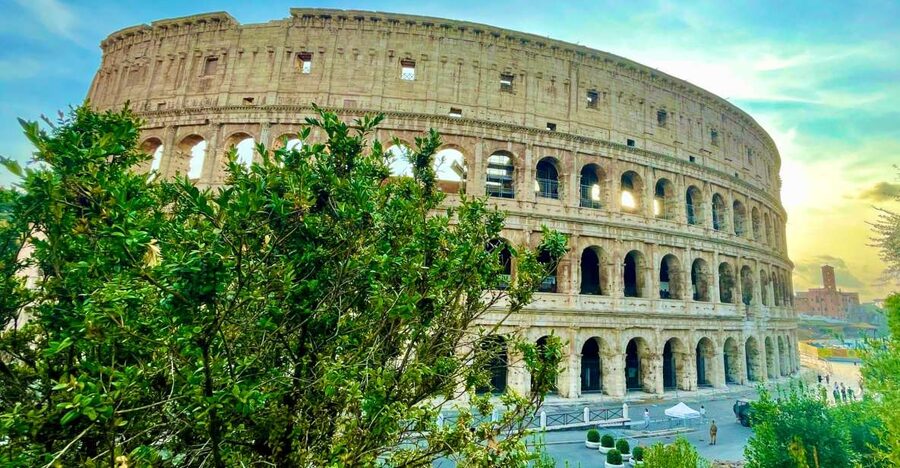
Rome’s grandest sights are packed into three carefully planned days, but the best part is the range: you move from Michelangelo’s Sistine Chapel to the underground catacombs, then from the Colosseum to the vast Baths of Caracalla. I like the private chauffeur, which saves you from wrestling with Rome’s traffic and helps link sights that are spread across the city. I also like the private guides, who can adjust explanations to your interests. The main drawback is the pace. This is a full Roman serving, with long visits, walking, stairs, and set lunch breaks that are not included.
The tour is especially useful if you value time and want help with the city’s hardest ticket lines. Stefano is named as an especially punctual and professional driver, while Giorgio is noted for making transfers comfortable and adding historical context. Guide assignments can vary, so treat those names as examples rather than a promise. Dress rules and schedule changes matter, especially at the Vatican and archaeological sites.
Key points to know before booking
- Three private sightseeing days: Cover the Vatican, Colosseum, Forum, catacombs, Baths of Caracalla, and Castel Sant’Angelo without joining a large group.
- A driver connects distant sights: Private transport is useful for the Appian Way, Colosseum, Vatican, and Baths of Caracalla.
- The Vatican comes with skip-the-line entry: See the Gallery of Maps, Tapestry Gallery, and Sistine Chapel with a private guide.
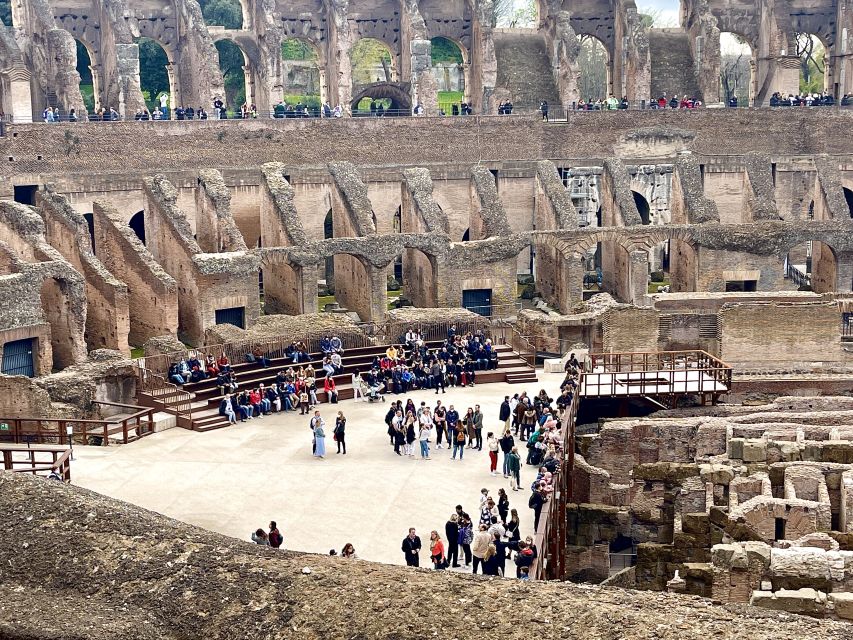
- The ancient city gets proper attention: The Colosseum visit includes Palatine Hill and the Roman Forum, not just a quick look inside the arena.
- Rome beyond the usual postcard stops: The catacombs and Baths of Caracalla offer a quieter, more spacious view of ancient life.
- Expect strict clothing rules: No shorts, short skirts, or sleeveless shirts are allowed, and you need valid identification.
Three days that cover Rome’s major chapters
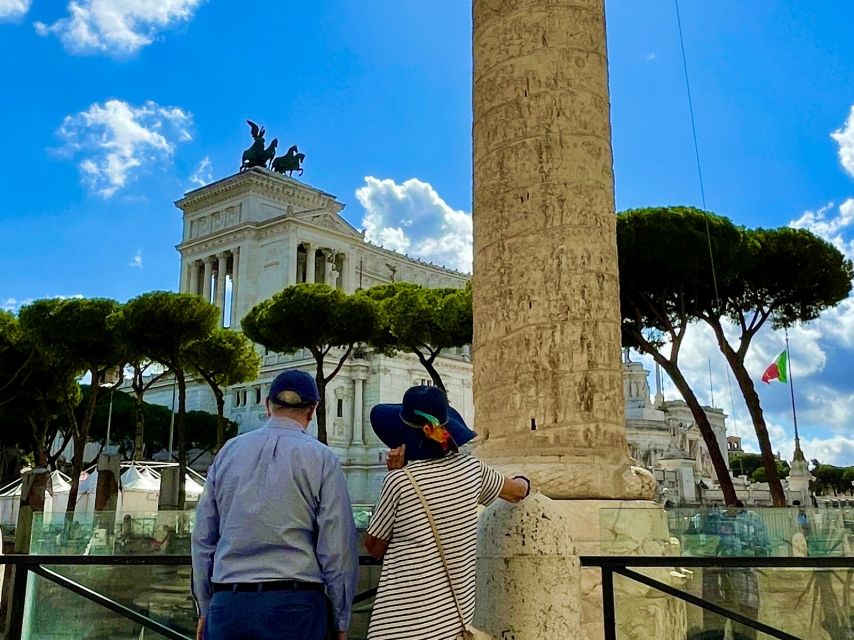
This is not a gentle introduction with one major sight per day. It is a high-content private program built around the places that usually take the most planning. Your driver picks you up at your hotel, and private guides handle the main visits.
That arrangement has real value in Rome. The city’s attractions sit in different districts, and the archaeological sites are not always close to the metro. You still have to walk, stand, climb, and keep to the schedule, but you spend less energy figuring out how to get from one historic center to another.
The private format also gives you room to ask questions. If your group wants more about emperors, Christian art, engineering, or papal politics, you can steer the conversation. Available guide languages include English, German, French, Spanish, Russian, Italian, and Portuguese.
More Chauffeur Services in Italy
- The ORIGINAL Fiat 500 3hour chauffeured tour
★ 5.0 · 142 reviews - Rome: Private 3-Hour Tour by Chauffeur-Driven Vehicle
★ 4.9 · 63 reviews - Chauffeured Private Tour of Rome
★ 5.0 · 37 reviews
Day 1: Baroque Rome and the Vatican Museums
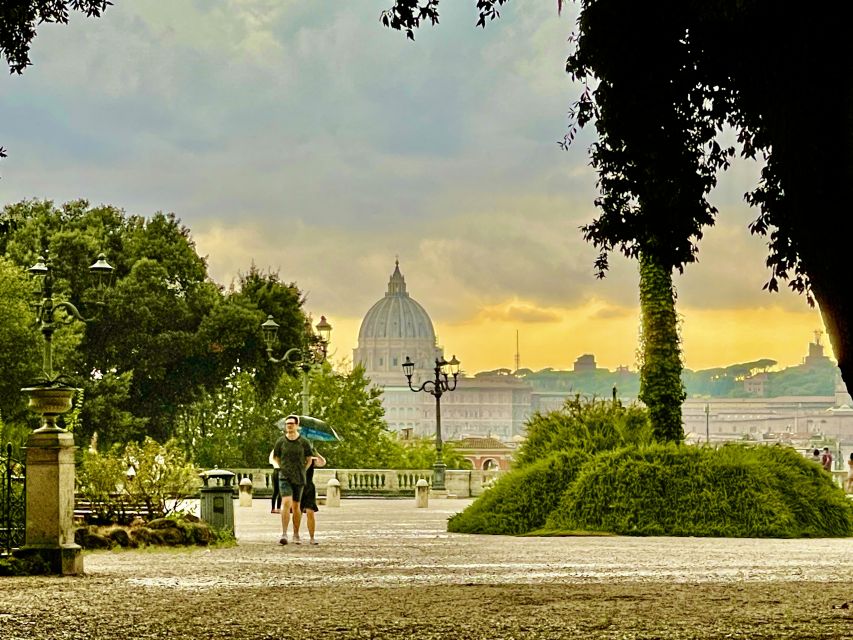
The first morning introduces you to central Rome through a series of famous squares and fountains. You see the Spanish Steps, Piazza Navona, and Piazza di Santa Maria della Pace before reaching the Trevi Fountain, the Pantheon, and the Tiber.
This opening portion works best as an orientation rather than a full walking tour of every site. You get a feel for how Rome layers ancient buildings, Renaissance churches, and Baroque decoration into the same few streets. The Trevi Fountain is grand and crowded, while the Pantheon offers a more focused look at Roman engineering and later Christian use.
The route also includes Hadrian’s Mausoleum and Ponte Sant’Angelo. Hadrian’s Mausoleum is now known as Castel Sant’Angelo, but on the first day you mainly appreciate its position beside the river and the bridge lined with angel sculptures. The interior visit comes on Day 3, so this first look gives you a useful preview.
You have a one-hour lunch break before entering the Vatican Museums. Lunch is not included, and the break is long enough for a proper meal rather than a rushed snack. Keep your food plans simple, since the Vatican visit is the day’s main event and you will want comfortable shoes afterward.
The Vatican Museums and Sistine Chapel
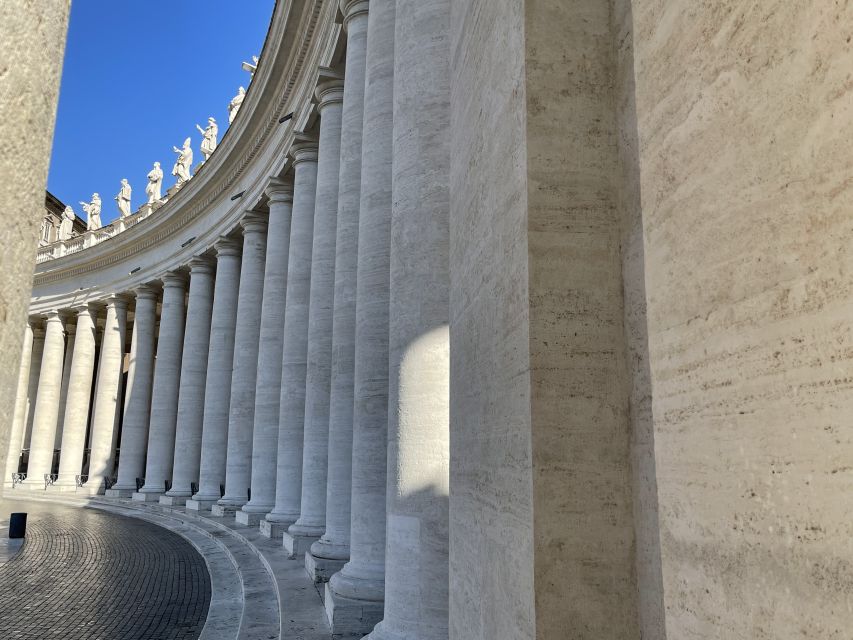
The private Vatican visit uses skip-the-line access, which is one of the strongest practical reasons to choose this experience. The Vatican Museums can be tiring even when you know where you are going. A guide helps you make sense of the huge collection instead of wandering through rooms without a clear thread.
The route includes the Gallery of Maps, where painted maps line a long corridor overlooking the Vatican Gardens, and the Tapestry Gallery. These rooms help you understand how the papal collections were assembled and displayed. You will also see works gathered by successive popes, so the museum feels less like one single collection and more like a record of changing taste and power.
The climax is the Sistine Chapel. This is one of those places where the room itself matters as much as the ceiling. The chapel is still used for religious functions, and silence and clothing rules are taken seriously. Follow the guide’s instructions and do not expect to linger in the same casual way you might in an ordinary museum gallery.
The Basilica may close without notice because of religious ceremonies, papal audiences, masses, or holidays. The supplied schedule specifically warns that Basilica access cannot be guaranteed at those times. It is wise to treat the Vatican Museums and Sistine Chapel as the firm core of the visit, with Basilica entry dependent on circumstances.
Day 2: Catacombs, the Appian Way, and the Colosseum
Day 2 begins outside the densest center, along the Appian Way. This ancient road is tied to Rome’s expansion and to the early Christian burial grounds beneath it. The catacomb visit lasts about 45 minutes and takes you into underground tunnels used during periods of persecution.
The catacombs are not a polished museum display. You see narrow passages and burial spaces, and the atmosphere is quiet and serious. The underground network is described as extending for about 93 miles, or 150 kilometers, across the wider area. You will visit only a small part of that system, but even a short tour gives you a different sense of early Christian life and death than the grand churches provide.
This section is semi-private rather than fully private, so it may feel less tailored than the other visits. It is also not the best portion for anyone uncomfortable with enclosed spaces or uneven walking surfaces. The tour information does not promise a particular catacomb, so the exact underground site may depend on the day’s arrangements.
A short panoramic drive follows, taking you toward the Colosseum. That transfer is useful because the Appian Way and the ancient city center are not next door. Instead of losing time arranging a taxi or public transport, you can use the drive to rest and change gears.
More Chauffeur Services in Rome
- Private Fiumicino Airport Transfer to Rome: Luxury Chauffeur Van
★ 3.5 · 14 reviews - Rome: Private Night Tour by Chauffeur-Driven Vehicle
★ 4.5 · 3 reviews
Inside the Colosseum
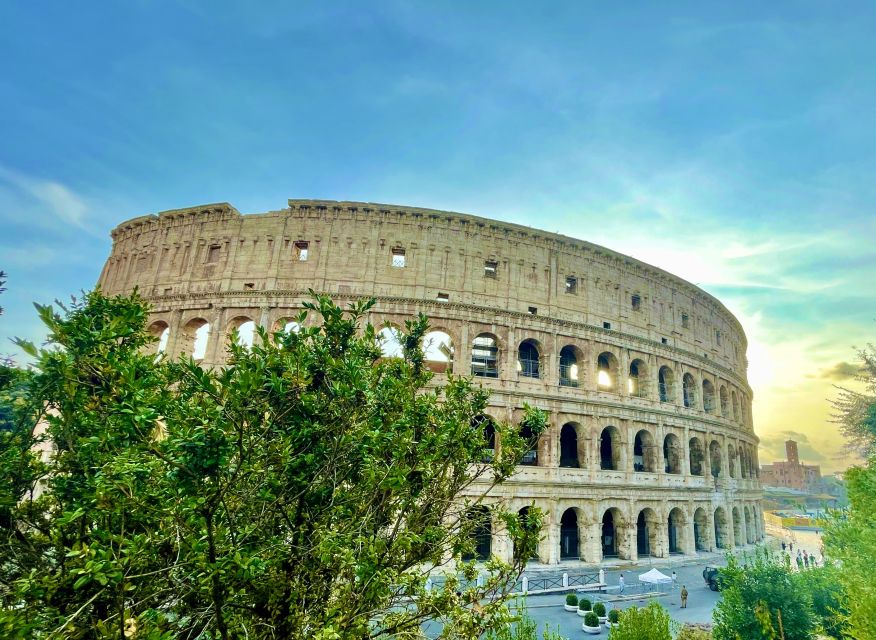
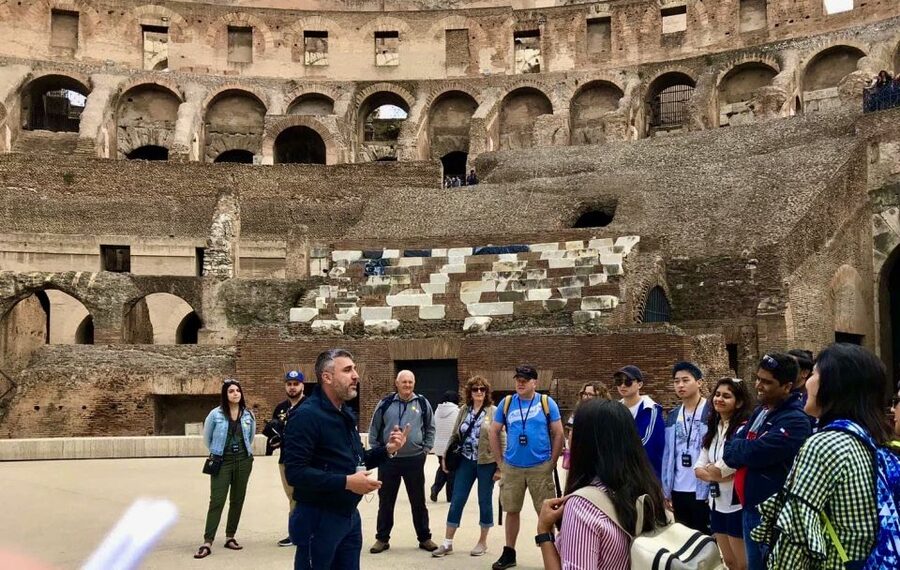
After a one-and-a-half-hour lunch break, you enter the Colosseum on a private skip-the-line visit. The longer lunch window is helpful because this part of the day is substantial. Bring water and wear shoes with good support. You will be on your feet around large archaeological areas, and the old paving can be irregular.
The guide explains how Roman builders created the arena and how the structure handled huge crowds. You also learn about gladiators and the staged contests involving exotic animals. The most useful part of a guided visit is connecting the physical building to the systems behind the spectacle: entrances, seating, crowd movement, performers, and imperial display.
The Colosseum can be emotionally complicated. It is a beautiful architectural survivor, but it was also a place built around violence and public entertainment. A good guide helps you hold both facts at once, rather than treating the arena as just a photo stop.
Palatine Hill and the Roman Forum
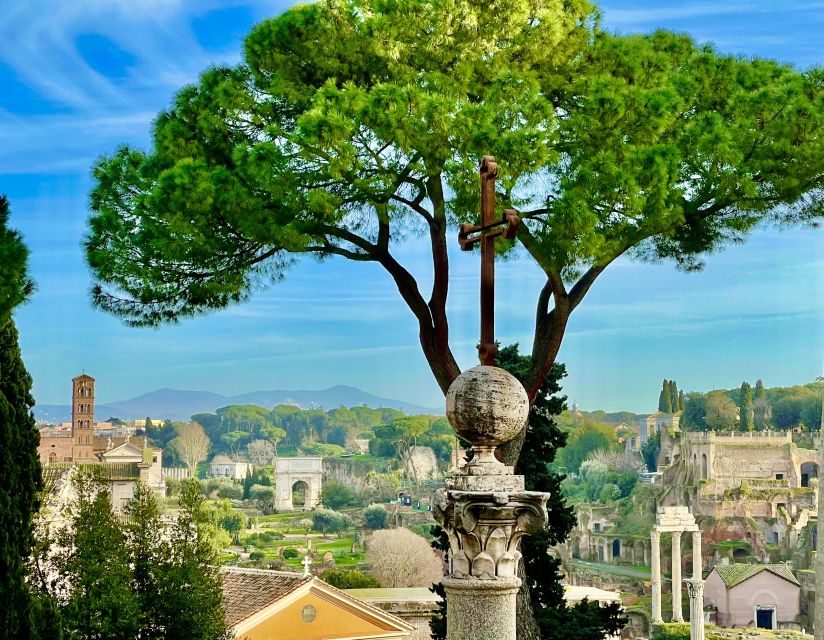
The visit continues to Palatine Hill and the Roman Forum. Palatine Hill was associated with imperial residences and gives you a sense of the upper level of Roman power. The Forum below was the center of public, political, religious, and commercial life.
Here you see the remains of the Senate House, the Temple of Vesta, and the triumphal arches of Constantine, Titus, and Septimius Severus. The ruins do not explain themselves. Columns are scattered, walls are partial, and modern Rome is always nearby. Private guidance is particularly useful here because it supplies the sequence that the stones no longer show clearly.
The Forum and Palatine can be hot, exposed, and tiring. The itinerary places them after the Colosseum, so Day 2 may be the hardest physically. If your group includes children, older adults, or anyone who dislikes extended walking, discuss the pace with the guide at the start.
Day 3: Castel Sant’Angelo from tomb to fortress
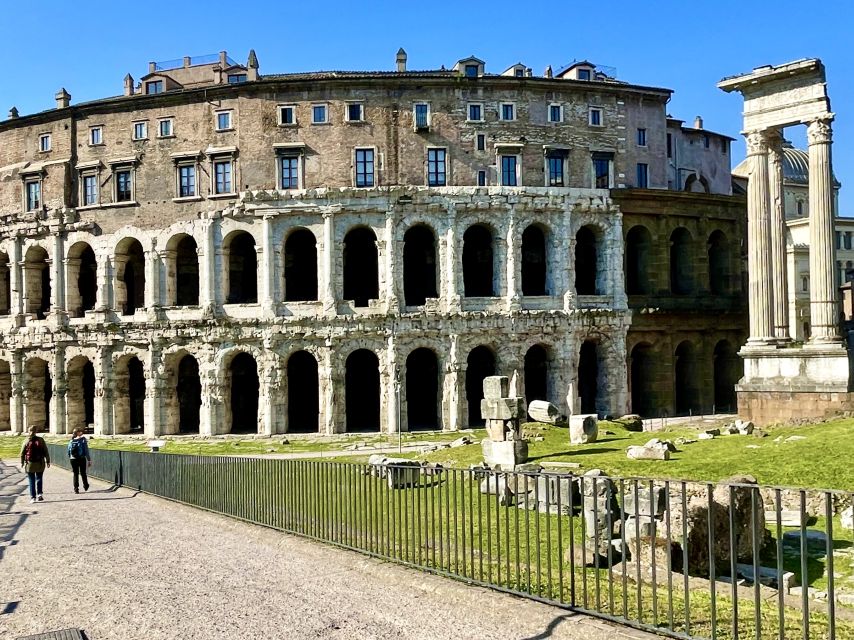
The final day starts with a two-hour private visit to Castel Sant’Angelo. The building began as Emperor Hadrian’s mausoleum and later served as a papal residence, fortress, prison, execution site, and museum. That unusual succession of roles makes it one of Rome’s most layered stops.
The route takes you through the fortress and its artworks before reaching the rooftop terrace. The views are a major reward. From above, you can look across Rome and back toward the river and Ponte Sant’Angelo. After seeing the exterior on Day 1, you now get the full interior story and a clearer idea of how the building changed over time.
I like this stop because it balances the grand museum collections with a place that feels more architectural. You are not only looking at paintings. You are moving through ramps, rooms, defensive spaces, and elevated viewpoints. The guide can also connect the castle to the nearby Vatican area and explain why the building mattered to popes as a place of refuge and control.
The visit lasts two hours, so it is not a quick photo opportunity. You should expect stairs and a fair amount of walking. The rooftop is an excellent point for photographs, but the experience is still about the building’s changing purpose, not only the view.
The Baths of Caracalla and Rome’s public life
After a one-and-a-half-hour lunch break, the driver takes you to the Baths of Caracalla. These were the second-largest public baths in ancient Rome, and the scale is immediately different from the tighter spaces of the Colosseum or catacombs.
A private guide leads a two-hour visit through the remains. You see parts of the ancient heating system, fragments of mosaic floors, huge vaulted rooms, and porticoes. The heating system is particularly helpful for understanding that Roman baths were not just pools. They were major engineering projects requiring fuel, water, labor, and careful control of heat.
The size of the ruins also helps you picture daily Roman life. Public baths were places for washing, exercise, conversation, and social contact. The surviving walls and vaults are impressive, but the guide’s explanation gives them a human scale.
This is another exposed archaeological area, and it follows three busy days of sightseeing. The reward is space and a slower sense of ancient Rome. The drawback is that you may be tired by the time you arrive. If you prefer a light final afternoon, this schedule may feel demanding.
What the private chauffeur adds
The driver is not simply a taxi from one monument to the next. The service is central to the design of the program because the itinerary covers central squares, the Vatican, the Appian Way, the Colosseum, Castel Sant’Angelo, and the Baths of Caracalla.
A private vehicle also lets the schedule respond to local conditions. The tour information notes that traffic, queues, weather, high temperatures, rain, ice, and other events can change the plan. One guide or driver may suggest adjusting timing when conditions shift, although no company can remove Rome’s traffic or unexpected closures.
Stefano is identified as punctual and professional, and he also discusses Roman history during transfers. Giorgio is identified as a particularly strong guide, with comfortable city transfers making the sightseeing easier. Your assigned staff may be different, but these examples show the kind of service the program aims to provide.
Is the cost worth it?
No price is provided here, so I cannot judge the exact financial deal. I can explain what you are paying for: private transport, private guiding at the major museums and monuments, skip-the-line arrangements at the Vatican and Colosseum, and a schedule that combines sights normally booked as separate excursions.
The value is strongest if you have only three days, dislike coordinating tickets, or want one company to manage the movement between far-flung sites. It is also useful for a family or small group that wants to ask questions without keeping up with a large tour.
The value is weaker if you enjoy making your own route, prefer long unscheduled meals, or want to spend an entire day at one museum. Lunches are not included, and the three-day plan has plenty of fixed timing. You also need to accept that skip-the-line does not mean no security checks or no crowding. Rome’s major sights remain popular.
Cancellation allows a 50 percent refund when you cancel up to four days in advance. Check the final itinerary by email or phone a few days before departure, since exact timing can change.
Practical preparation for the three days
Bring a valid passport or identity card. Identification is required at the Vatican Museums and archaeological areas, and you should not assume a photo on your phone will be accepted.
Wear comfortable shoes and bring a change of clothes. The program includes walking, stairs, outdoor ruins, underground passages, and long museum visits. A change of shirt can be useful after a warm day among the ruins.
The dress code is strict. Shorts, short skirts, and sleeveless shirts are not allowed. Leave luggage and large bags behind, and do not bring alcohol or drugs. These rules are especially important at the Vatican, where access can be refused for unsuitable clothing.
The Basilica and Sistine Chapel can close without notice, and religious holidays or ceremonies can block Basilica access. Weather and other events may also alter the route. Keep some flexibility in your expectations, even with a private booking.
Who should book this Rome tour?
I would choose this experience if you want the major Roman sights explained properly and you prefer a driver to handle the city connections. It suits first-time visitors with limited time, families that value convenience, and small groups interested in history rather than only photographs.
I would hesitate if you want a relaxed holiday with late mornings and free afternoons. Day 2 is especially full, and Day 3 remains substantial. The private format softens the pace because you can communicate directly with the guide, but it does not make Rome’s distances, stairs, or crowds disappear.
Book it if time, transport, and expert context matter more to you than independence. Skip it if you would rather choose one neighborhood each day and explore at your own speed. The strongest reason to go is the combination of headline sights with the catacombs and Baths of Caracalla, two places that are easy to miss when planning Rome on your own.
FAQ
How long does the tour last?
The experience lasts three days. Starting times are subject to availability, and the final itinerary is sent a few days before the tour date.
Is the tour private?
Yes. The main program is for a private group, with private guides and a private driver. The catacombs portion is described as semi-private.
Which languages are available?
Guides are available in English, German, French, Spanish, Russian, Italian, and Portuguese.
Does the tour include skip-the-line entry?
Skip-the-line access is included for the Vatican Museums and Sistine Chapel, as well as the Colosseum and Roman Forum visit.
What should I bring?
Bring a valid passport or identity card, comfortable shoes, and a change of clothes. Identification is required at the Museum and archaeological areas.
Can the Vatican Basilica close during the tour?
Yes. The Basilica and Sistine Chapel may close without notice, and Basilica access is not possible during some religious holidays, ceremonies, papal audiences, beatifications, or masses. The itinerary may also change because of weather or other events.
More Three-Day Trips in Rome
- From Hanoi: Sapa 3-Day Medium Trek and Limousine Trip
★ 4.5 · 59 reviews - Sri Lanka Car Rental with Driver – 3 Days Minimum, 180km/Day
★ 5.0 · 44 reviews - 3D2N PRIVATE CAR TOUR + ENGLISH SPEAKING DRIVER (Private rooms)
★ 5.0 · 42 reviews - From Hanoi: 3-Day Sapa Trekking with Limousine Transfer
★ 4.3 · 30 reviews
Just added around Rome
- Rome Countryside: Wine Tasting Tour with Private Driver★ 5.0 · 5 reviews
- Rome: Private 4h trip with driver Castelli Romani and Lakes★ 5.0 · 2 reviews
- Rome: Private Full day City Tour with driver★ 5.0 · 2 reviews
- Rome: Half-Day Vespa Tour with Private Driver★ 5.0 · 34 reviews
- Rome: Holy Doors Pilgrimage with Private Driver and Guide★ 4.8 · 5 reviews
- Rome: City Highlights Vespa Tour with Driver★ 5.0 · 4 reviews
- Rome: Electric Tuk-Tuk photo experience with driver★ 3.9 · 4 reviews
- Rome by night in Mercedes Van 2 hour★ 5.0 · 6 reviews
Rome Limo Tours, compared.
Private Rome WOW Tour in 1 Day: Luxury Car, Guide, Tkts & Lunch!
Read our review →

Rome Airport Transfer – Private Luxury Service with Driver
Read our review →
Rome Private Tour with Driver: Colosseum and Vatican in a Day
Read our review →
Rome 4 Hours Private Guided Tour with Pickup in Luxury Minivan
Read our review →

Private Luxury Transfer from Fiumicino Airport to Rome
Read our review →Browse the lists this tour appears in