
Review · KYOTO
From Kyoto: Nara Private Tour with Hotel Pickup
Nara’s best sights fit neatly into this six-hour private tour, with the Great Buddha, ancient temples, sacred deer, and old shopping streets all connected in one easy day from Kyoto. You’ll see the places that make Nara special without having to puzzle out trains, tickets, and walking routes on your own.
I like the private format, especially because guide Masa has shown flexibility with snack stops and an extra destination when asked about it ahead of time. I also like the mix of serious Buddhist monuments and playful deer, which gives the day more variety than a temple-only outing.
The main point to check is transportation cost. The tour includes hotel pickup and drop-off, but the description also lists transportation as not included, with about 70 minutes of train travel each way. Confirm exactly what the $298 price covers before booking.
Key points to know before you book
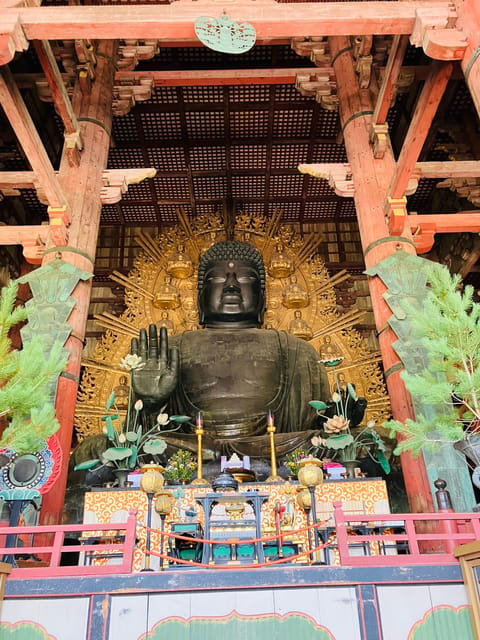
- The Great Buddha is the main event: Todai-ji houses a bronze Buddha about 15 meters tall, inside one of Japan’s most famous temple complexes.
- Masa may be your guide: He is praised for patience, hospitality, clear explanations, and flexibility with planned requests.
- Deer are part of the experience: At Nara Park, you can feed the free-roaming deer and take photos, while learning why they are treated as sacred messengers.
- The route is well balanced: You get Kofuku-ji, Nara Park, Todai-ji, Higashimuki Shopping Street, and time on the train with a private guide.
- Plan for walking: Comfortable shoes, water, sunscreen, and a camera are sensible choices.
- Check the final price carefully: Entrance fees are included, but meals, drinks, personal spending, and transportation costs are listed separately.
Why Nara makes a good private day from Kyoto
Kyoto can fill several days with temples and gardens, but Nara gives you a different view of Japan’s past. It was Japan’s first permanent capital, and its major religious sites are tied closely to the early development of Buddhism in the country.
The appeal of this tour is its simple rhythm. You start in Kyoto, take the train for roughly 70 minutes, walk through Nara’s central streets, visit two important temples, spend time with the deer, and return by train. You are not trying to cover every corner of the city. Instead, you get a focused introduction to the sights most people come to Nara to see.
A private guide changes the feel of the day. You can ask why a building matters, pause for a snack, or request an extra stop in advance. That matters in Nara, where the difference between a temple, shrine, sacred animal, and historic monument is easy to miss if you are only following signs.
The tour is listed at $298 per person. That is a serious price, particularly because train transportation, meals, drinks, and personal expenses are not included. Still, private guiding can make sense for families, first-time visitors, or anyone who prefers help with the route and cultural context rather than managing everything alone.
More Limo Tours in Kyoto:
- Kyoto: Private Highlights Tour with Guide and Luxury Vehicle
★ 4.6 · 316 reviews - Private car tour in Kyoto (up to 4)
★ 5.0 · 123 reviews - Kyoto Day Trip using Private Car with English Driver (up to 5)
★ 5.0 · 74 reviews
The 70-minute train ride from Kyoto
The day begins with hotel pickup in Kyoto, followed by a train journey of about 70 minutes. The ride takes a noticeable share of a six-hour tour, but it also gives you a clear break between Kyoto and Nara.
This is not a private car excursion. The train is part of the public transportation experience, and the stated inclusion details need careful checking. Hotel pickup and drop-off are included, while transportation costs are also listed as excluded. That could mean the guide’s service includes meeting you at the hotel and accompanying you by train, while your fares are extra.
I would ask before paying:
- Are the train fares included in the $298 price?
- Is pickup available at any Kyoto hotel?
- Does the guide meet you at your hotel or at the station?
- Are local trains used for both directions?
The answers matter because two 70-minute train trips leave less time for sightseeing than the headline six hours might suggest. On the other hand, the route is direct enough to make Nara a practical day trip rather than a difficult side journey.
Higashimuki Shopping Street and your first look at Nara
The first scheduled stop in Nara is Higashimuki Shopping Street, with about 20 minutes of guided time. This covered shopping street is a useful introduction to the city because it shifts you from the station area into Nara’s everyday commercial center.
Twenty minutes is brief. Think of this as a quick orientation and a chance to notice local shops, small food stops, and the atmosphere of central Nara, not as a full shopping session. If you want time for snacks or souvenirs, tell your guide early.
This is also where a private tour has an advantage. The route can feel more personal when your guide points out local specialties or helps you decide where to pause. Masa has been especially flexible about extra snack stops, but same-day changes may be difficult, so request anything important before the tour begins.
Kofuku-ji and the quieter side of Nara
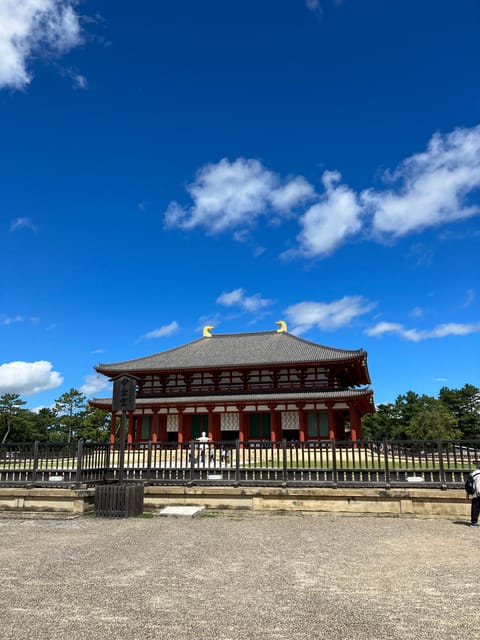
Kofuku-ji receives about 30 minutes of guided time. Founded in 669, it is one of Nara’s Seven Great Temples and part of the UNESCO World Heritage listing connected with the city’s historic monuments.
The temple grounds offer a quieter start than the larger Todai-ji complex. You can look at the wooden architecture, learn about the temple’s place in Nara’s religious story, and begin to understand how Buddhist institutions shaped the old capital.
Half an hour is enough for an introduction, but not for a slow, detailed study of every structure or cultural treasure. If Kofuku-ji is a priority for you, tell the guide. A private format gives you a better chance of using the available time in the way you prefer, though the overall schedule still has firm limits.
One useful part of the guiding is the chance to clarify the difference between temples and shrines. That distinction can seem simple in theory but confusing when you are moving through Japan’s historic sites. Masa has been particularly praised for explaining Nara’s culture and for answering questions patiently.
Same driver, a different day out:
- Private car tour in Kyoto (up to 9)
★ 5.0 · 74 reviews - Luxury Kyoto 1-Day Private Car Tour with Nara & Osaka Options
★ 5.0 · 61 reviews - Private car tour Let’s uncover secrets of majestic Kyoto history
★ 5.0 · 45 reviews - Kyoto:Private Tour/Luxury Vehicle with Guide & photographer
★ 4.8 · 35 reviews
Feeding the deer at Nara Park
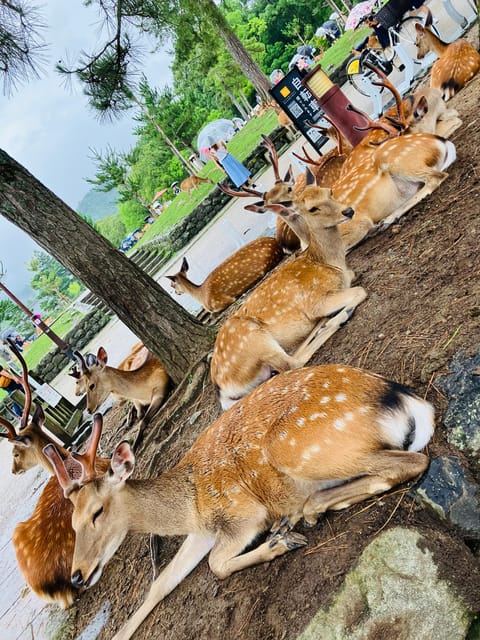
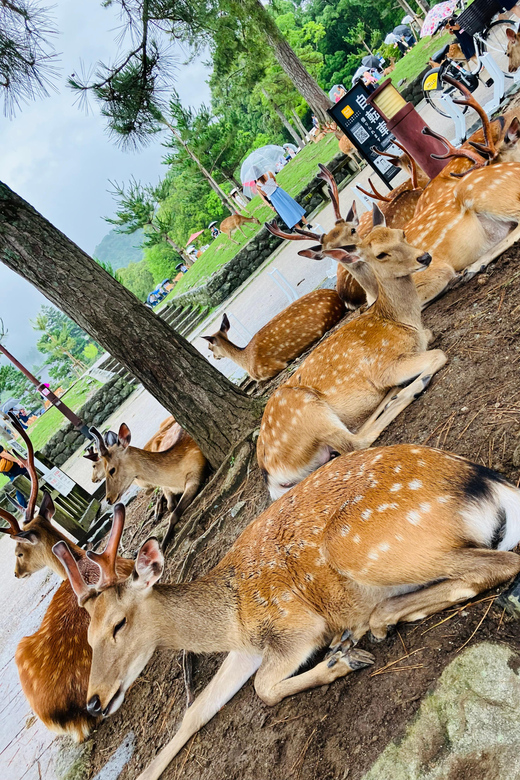
Nara Park is the most playful part of the day. You get about an hour here, with time to walk through the open green space, feed the deer, and take photographs.
The deer are not just a cute photo opportunity. They have been associated with Nara for centuries and are regarded as messengers of the gods. That belief helps explain why they are such a strong symbol of the city and why the experience feels different from seeing animals in a zoo.
Keep your expectations sensible. The deer are free-roaming, so the encounter is not tightly controlled. You might find them calm and eager when food is available, while others may wander off or crowd around you. Follow your guide’s instructions and handle feeding carefully.
An hour gives you enough time to enjoy the park without making the whole day about deer. You can take photos, watch how the animals move through the public space, and look toward the surrounding hills. Bring water and sunscreen, since this portion involves outdoor walking and the amount of shade can vary.
This was the most praised part of the day in the feedback provided, especially for families and first-time visitors. It is easy to understand why. The deer add a light, memorable moment between two major temple visits, and you do not need to be a specialist in Japanese history to enjoy it.
Todai-ji and the Great Buddha
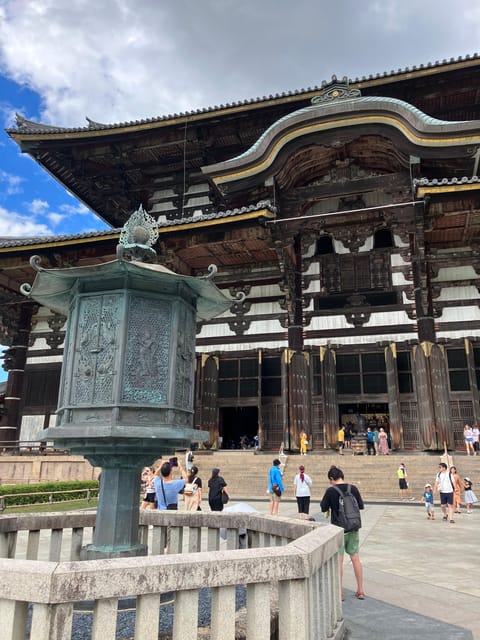
Todai-ji is the tour’s major cultural stop, with about one hour of guided time. The temple is home to the Great Buddha, a bronze statue approximately 15 meters tall and one of the largest of its kind in the world.
The scale is the point. Even before you focus on the religious details, the size of the statue and temple hall make a strong impression. Your guide can add the context that a quick independent visit might miss, including Todai-ji’s founding in the eighth century and its role as a symbol of Buddhism in Japan.
An hour is a useful amount of time for the principal hall and grounds, but it is not a full study visit. Todai-ji is one of Nara’s busiest and most important places, so you should expect to share the site with other people even though your own group is private.
This private tour does not mean you have the temple to yourself. It means your guide can help you move through it at your pace, answer questions, and explain what you are seeing. That distinction is important when comparing this experience with a private vehicle tour or a large group excursion.
If the Great Buddha is the main reason you are considering Nara, this stop justifies the trip from Kyoto. If you prefer quiet gardens and little-known buildings, the fixed focus on Todai-ji and Nara Park may feel more conventional.
Time for food, local streets, and extra stops
The schedule includes a 20-minute guided segment that is not clearly named, along with time in Nara’s traditional streets and local shops. That open space is useful because the day should not feel like a race from one ticket gate to the next.
Meals and beverages are not included, and the tour does not promise a dedicated lunch stop. One person enjoyed a lovely lunch during the day, and Masa has accommodated snack requests, but you should not assume a full meal is built into the price.
Ask your guide about food needs before departure. You may be able to fit in a local dish or quick snack, but the six-hour schedule includes the round trip to Kyoto and several guided visits. A long lunch would reduce time at the temples or park.
The private format is most useful here. A large group usually needs to follow a fixed clock, while this tour may allow a little more room for a snack or added destination if arranged in advance. The guide’s flexibility is a benefit, but it is not a promise that every request can be added on the day.
What the guide adds to the day
The listed guiding languages are English and Japanese. Masa is named in the feedback and has been praised for hospitality, patience, preparation, and a willingness to adjust the day when contacted ahead of time.
That flexibility is worth treating as a practical feature rather than a vague bonus. You can contact the guide in advance with questions, requests for a different start time, or an extra destination. Same-day changes may be difficult, so planning matters.
The guide also provides the cultural connection between the stops. Kofuku-ji, Nara Park, and Todai-ji are not just separate attractions. Together, they show how Nara combines early Japanese state history, Buddhist institutions, sacred animals, public space, and present-day commerce.
If you have a specific interest, say so before the tour. History, architecture, religion, photography, snacks, and family pacing may call for slightly different use of the available time. A private group gives you a better chance of being heard than a standard shared excursion.
Price, timing, and practical tradeoffs
At $298 per person, this is not a budget trip to Nara. You are paying for a private guide, hotel pickup and drop-off, entrance fees to the listed sites, and a tailored pace. You are not paying for meals, drinks, personal expenses, or clearly stated transportation costs.
The value is strongest for a small group that wants personal attention. If two or more people share the experience, the private format may feel more reasonable than paying for several separate guided services. For a solo visitor, the cost is harder to justify unless convenience and personal guiding are especially important.
The six-hour duration is efficient but compact. The train ride takes about 140 minutes in total, leaving roughly four hours for the city, depending on transfers and timing. That is enough for the main sights, but not enough for a leisurely exploration of every temple, museum, shop, and park path.
The tour is listed as wheelchair accessible, which is useful for planning, though the exact route and access at each site should still be confirmed for your needs. Everyone should bring comfortable shoes, water, sunscreen, and a camera.
Free cancellation is available up to 24 hours in advance for a full refund, and you can reserve now and pay later. Those terms help if your Kyoto schedule is still changing, but they do not remove the need to confirm the transportation question before booking.
Should you book this Nara tour?
Book it if you want the major Nara sights with a private English or Japanese-speaking guide, hotel pickup, and room to request small adjustments. It is especially suited to families, first-time visitors, and anyone who wants help understanding the difference between temples, shrines, sacred animals, and historic landmarks.
The strongest reasons to choose it are the Great Buddha, the deer at Nara Park, and Masa’s reported flexibility with snacks and extra stops arranged ahead of time. The main drawbacks are the high price, the limited six-hour schedule, and the unclear treatment of train fares.
Before booking, confirm the transportation cost, hotel pickup details, and any food or language requests. If those details work for your group, this is a tidy and engaging way to see Nara without spending a full day working out the logistics yourself.
FAQ
How long is the tour?
The tour lasts six hours, including travel between Kyoto and Nara. The train journey is listed as about 70 minutes each way.
What places does the tour visit?
The route includes Higashimuki Shopping Street, Kofuku-ji, Nara Park, and Todai-ji. It also includes hotel pickup and drop-off in Kyoto.
Can I feed the deer?
Yes. At Nara Park, you have the opportunity to feed the free-roaming deer and take photographs.
Is the Great Buddha included?
Yes. The tour visits Todai-ji, home of the Great Buddha, and entrance fees to the mentioned sites are included.
What languages are available?
Live guiding is available in English and Japanese. Masa is one guide associated with this experience.
Is transportation included in the price?
The details state that hotel pickup and drop-off are included, but transportation costs are not included. Confirm whether your train fares are extra before booking.
Just added around Kyoto
- Kyoto and Nara Private Car Tour with a Local English Guide Driver★ 5.0 · 16 reviews
- Kyoto tour with English Speaking Chauffeur★ 5.0 · 29 reviews
- Private Kyoto Customizable Tour With Guide and Luxury vehicle★ 4.5 · 29 reviews
- Kyoto Custom Private Car Tour with Local Guide★ 4.5 · 26 reviews
- Kyoto Highlights Private Car Day Tour with English Speaking Guide★ 5.0 · 3 reviews
- Kyoto&Nara&Osaka: One day private Customized Car tour★ 5.0 · 3 reviews
- Kyoto Private Customizable Day Trip With English chauffeur★ 5.0 · 28 reviews
- 1-Day Kyoto and Nara Highlights Day Trip with a Private Car★ 5.0 · 3 reviews
Kyoto Limo Tours, compared.
Kyoto: Private Highlights Tour with Guide and Luxury Vehicle
Read our review →
Kyoto Day Trip using Private Car with English Driver (up to 5)
Read our review →
Luxury Kyoto 1-Day Private Car Tour with Nara & Osaka Options
Read our review →
Private car tour Let’s uncover secrets of majestic Kyoto history
Read our review →
Kyoto:Private Tour/Luxury Vehicle with Guide & photographer
Read our review →
Private Kyoto Customizable Tour With Guide and Luxury vehicle
Read our review →Browse the lists this tour appears in